


US-Iran Tensions
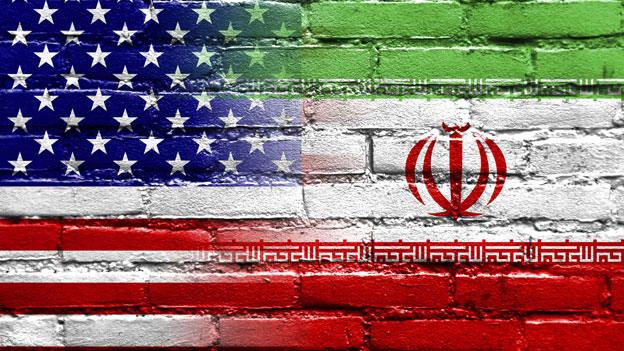
In recent days, news that Trump is considering military options against Iran has remained in the headlines. Reports indicate that US President Donald Trump is evaluating possible military options against Iran with his national security team. Trump mentions the large protests in Iran and Tehran’s harsh stance against demonstrators in almost every speech. Trump sometimes talks about military intervention. The US announced that it has sent a fleet consisting of the aircraft carrier USS Abraham Lincoln and other warships to the Middle East. This move shows that military intervention, which Trump often talks about, is on the table. Amidst all these developments, a senior official speaking on behalf of Iran at stated that they would consider any attack on Iran as an all-out war and would respond with the utmost severity. As these statements were being made, China’s representative to the United Nations warned the US, saying that Iran is an independent country and that China wants stability in Iran. This situation could have significant consequences not only politically but also economically. Any military tension in the Middle East would have a wide range of effects, from global energy markets to financial systems.
Background of the Tension and Military Options
The dispute between the US and Iran has been ongoing since the hostage crisis in 1979. However, the recent tension has a different nature. Trump’s withdrawal from the Iran nuclear deal in 2018 completely undermined trust in relations. The sanctions that followed directly targeted the Iranian economy. The killing of General Soleimani in 2020 brought the two countries to the brink of open conflict. Now Trump is back in the presidential seat. Iran’s progress in its nuclear program is troubling Washington. This situation is bringing military options to the table.
It is known that various scenarios are being worked on at the Pentagon. These include limited air strikes on nuclear facilities. Striking critical targets belonging to the Revolutionary Guards is also among the options. Some commentators mention operations against the Iranian navy in the Gulf. There is no definite information about the timing. Several triggering factors could initiate a possible intervention. Any attack on US troops or allies could be considered one such factor.
Trump’s personal approach plays a decisive role here. On the one hand, he has a rhetoric that avoids new wars and claims he deserves the Nobel Peace Prize. On the other hand, he makes statements of historic severity regarding Iran. This duality increases uncertainty. The reaction of countries opposed to tension in the region cannot be ignored either. Europe, China, and Russia have consistently stated that they oppose unilateral action. Even regional allies may be hesitant to allow their territory to be used. For example, Saudi Arabia has announced that it will not allow its airspace to be used in any possible intervention against Iran.
Potential Impacts on Financial Markets
The economic consequences of increased military tension would be far-reaching. In a global economy, the effects of a conflict in the Middle East would spread in waves. We have experienced this many times. Oil prices would be among the first to react. Iran produces about 3 million barrels of oil per day, but the real issue is the Strait of Hormuz. Approximately 20%–25% of the world’s oil trade passes through here. Iran has frequently threatened to close this strait in the past. Such a scenario would quickly affect oil prices. Rising energy costs pose a threat of inflation. This puts central banks in a difficult position.
When risk appetite declines, capital flows to safe havens. Significant global declines may be observed. Demand for precious metals and safe assets increases during periods of uncertainty. Gold prices are already at high levels. If the possibility of conflict increases, sharp movements would not be surprising. Bitcoin and other crypto assets could theoretically serve as a store of value, often described as ‘digital gold.’ However, in practice, they are still perceived as high-risk assets. The overall decline in risk appetite could negatively affect them as well. That said, interest in cryptocurrencies may increase in countries where confidence in local currencies is weakening. As a result, high volatility is inevitable.
Possible Scenarios and Expectations
Three main scenarios are possible for the coming period. These are:
Optimistic Scenario: Diplomatic channels are activated. The US and Iran engage in indirect negotiations. Europe, China, or Russia act as mediators. Tensions subside in a controlled manner. In this case, markets recover relatively quickly. Oil prices return to current levels. Risk appetite increases again.
Base Scenario: Tensions remain high but do not escalate into open conflict. Limited military movements and a cycle of retaliation are observed. Cyberattacks increase. Conflicts occur through proxy forces. In this scenario, uncertainty persists for a long time. Limited volatility in the markets continues.
Pessimistic Scenario: Tensions escalate into military conflict. The US strikes Iran’s nuclear facilities. Iran closes the Strait of Hormuz or launches an intense missile attack on US bases in the region. Israel joins the operation. The risk of a regional war emerges. The economic impact of this situation could be deep and long-lasting. Oil prices rise significantly and very rapidly. The global economy could enter a recession.
When current developments are examined, it can be said that the baseline scenario appears more likely. The Trump administration appears poised to increase military pressure, but it will not abandon its tendency to avoid full-scale war. Iran may also prefer asymmetric methods (such as drones) rather than direct confrontation.
Conclusion
The tension between the US and Iran is not only a regional but also a global issue. While it is difficult to reach a definitive conclusion on how realistic the possibility of military intervention is, this uncertainty itself is putting pressure on the markets. Financial markets appear likely to continue pricing in this possibility in the coming period. Increased volatility is likely in the oil, gold, foreign exchange, and cryptocurrency markets. Among these, cryptocurrencies, which are in the high-risk asset class, are likely to be among the most affected.
The negotiations planned for Friday in Oman may yield results. This shows that the possibility of a diplomatic solution still exists. In this process, the US wants Iran’s ballistic missile capacity to be discussed in addition to the nuclear issue, which forms the basis of the negotiations, while Iran opposes this. The coming weeks and months are critical. Developments need to be closely monitored. In this environment, cryptocurrency markets may respond to the increased liquidity needs of those seeking to avoid risk, while also serving as a safe haven amid growing distrust of the traditional financial system. Deepening geopolitical uncertainty may increase volatility in the short term, but in the long term, it may keep interest in alternative value storage instruments alive. The direction of global capital will be determined by diplomatic steps. Therefore, geopolitical developments are expected to be at the center of not only political but also financial strategies in the coming period.