


Market Compass
War, Macroeconomic Agenda, and Digital Assets
We are wrapping up a week marked by sharp turns for global markets, which concluded the first quarter of the year between the end of March and mid-week. The war in the Middle East remains our main agenda item and the fundamental driver shaping asset prices. Contradictory statements from officials caused market sentiment to shift frequently, and we observed this reflected in prices. While the price range and volatility for major digital assets, including Bitcoin, narrowed, sudden shifts in risk appetite made it quite challenging for investors to predict short-term direction.
Bitcoin, which started the past week on a positive note (around $66,000) following U.S. President Trump’s remarks emphasizing that the war could end within 2-3 weeks, rose to the $69,300 level on Wednesday. In his address to the nation, however, the President highlighted that they would strike Iran harder, and statements from the other side also offered no hope that a potential agreement could be reached anytime soon. In line with this, BTC briefly erased all of its weekly gains on Thursday but found a slight recovery, albeit weak, following news that shipping traffic in the Strait of Hormuz might resume, albeit on a limited basis.
Determining a direction for Bitcoin in the short term is quite difficult given the current market conditions. For the medium-term outlook, the price has begun to show signs of a potential bottoming process, but more evidence is needed to confirm an upward trend. We continue to maintain our bullish outlook for both the medium and long term.
Next week, markets will continue to monitor news related to the Middle East. While investors will look for clues that the war is nearing its end, they will also monitor U.S. macroeconomic indicators that will provide insights into the economic fallout from developments in the region. Following the mixed data on the labor market in recent months, inflation indicators will now be under our microscope. We will detail these and other notable developments below.
April 8 – FOMC Minutes: Can the Market Find a Clue Regarding the Interest Rate Change?
The U.S. Federal Reserve (FED) holds eight Federal Open Market Committee (FOMC) meetings each year and publishes the minutes three weeks after each meeting. As a detailed record of the FOMC meeting, they provide insight into the economic and financial factors influencing interest rate decisions and may offer clues about the FED’s next steps. A more “hawkish” stance than expected could put pressure on digital asset prices, while minutes containing relatively “dovish” messages could support price gains.
April 9 – The FED’s Preferred Inflation Indicator: PCE (February)
Markets, seeking to gauge the timing of the Federal Open Market Committee’s (FOMC) next interest rate decision and the trajectory of rate changes, will closely monitor the February Personal Consumption Expenditures (PCE) data, which will be released with a delay. This indicator is known as the metric preferred by FOMC officials for tracking changes in inflation. The March PCE data will be released on April 30.
U.S. Monthly Core PCE Data
Source: Bloomberg
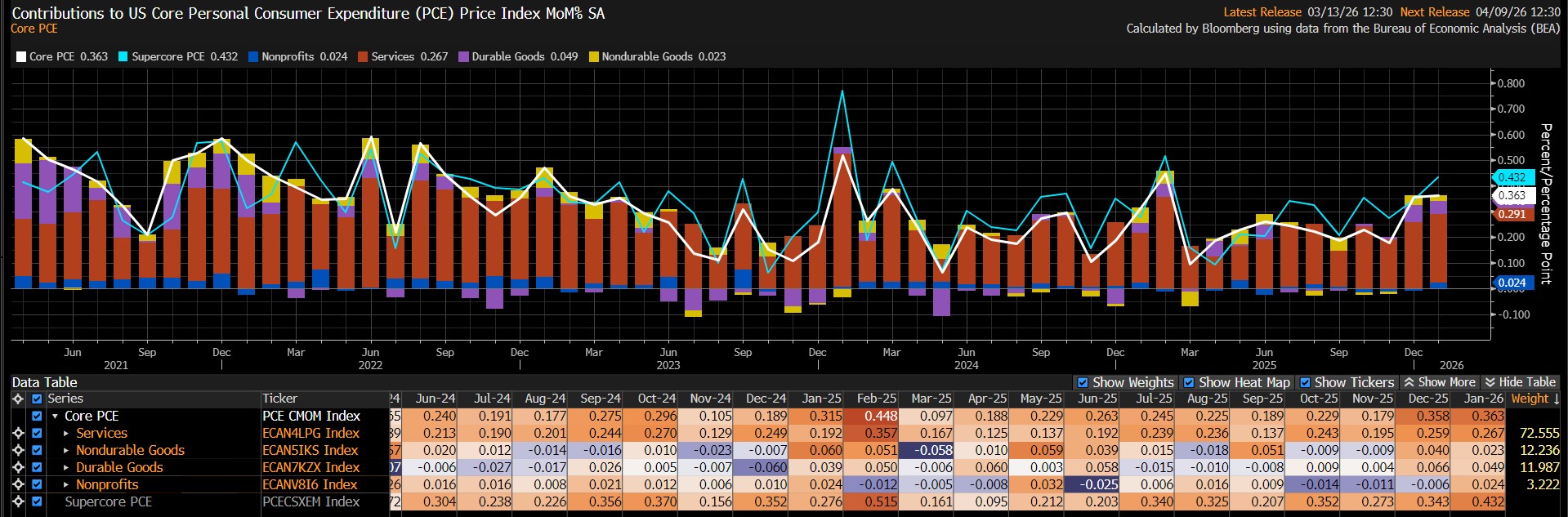
According to the latest data, core PCE rose by 0.4% in January compared to the previous month. The services sector continued to be the largest contributor to price increases. On an annual basis, core PCE increased by 3.1%. Our expectation is for an increase of approximately 0.27% in the core PCE data for January.
Darkex PCE Data Forecasts
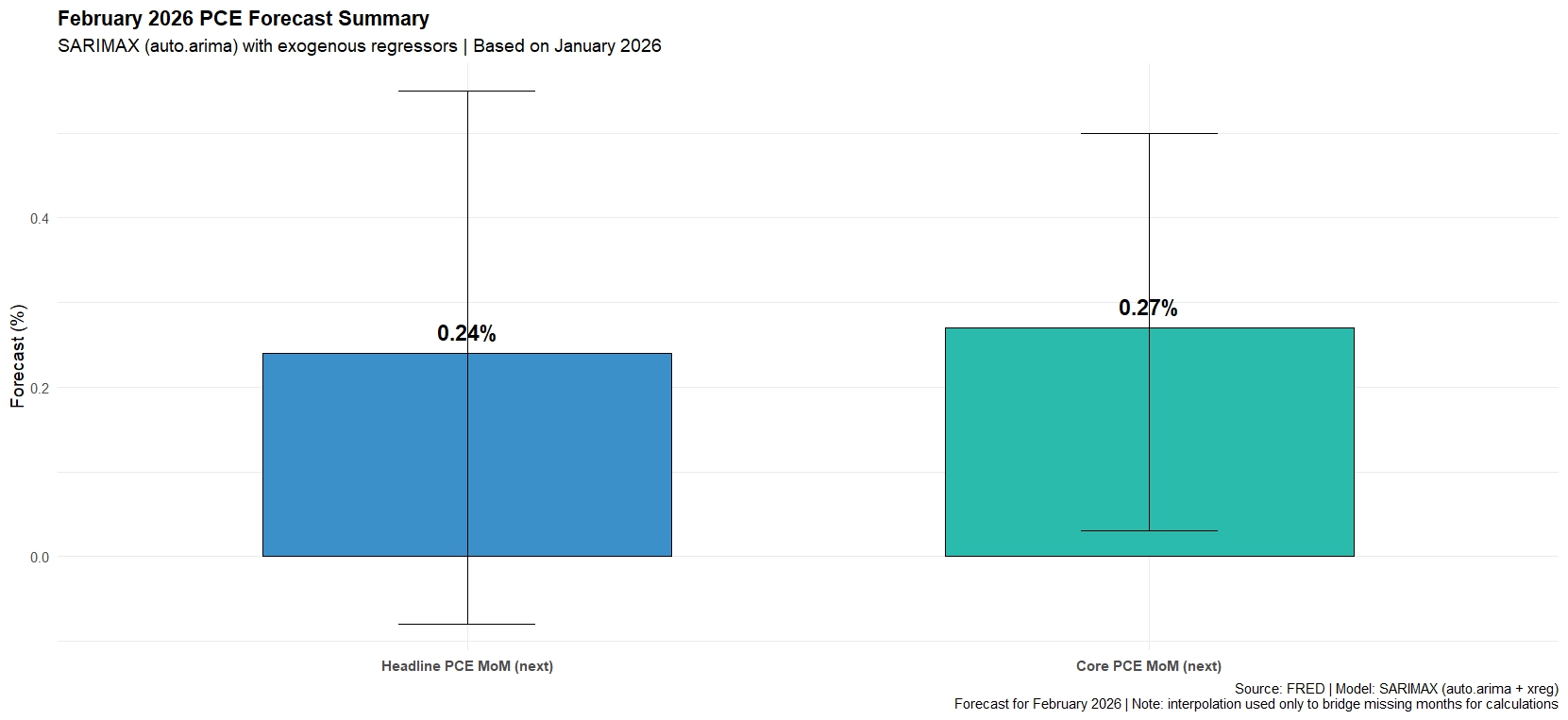
Source: Darkex Research
Data coming in above market expectations could support expectations that the Fed is moving a bit closer to a rate hike, thereby reducing risk appetite and putting pressure on digital assets, including Bitcoin. Data coming in below expectations, on the other hand, could have the opposite effect and pave the way for gains.
April 10 – U.S. Consumer Price Index: CPI
One of the key macroeconomic indicators that could provide insight into the U.S. Federal Reserve’s (FED) path for interest rate cuts will be March inflation, specifically the change in the Consumer Price Index (CPI). In his latest remarks, FED Chair Powell offered a relatively more optimistic assessment regarding inflation. He noted that the rise in oil prices caused by the war in the Middle East, which is driving up energy costs, could be a temporary dynamic. This assessment has eased concerns that the Fed might bring interest rate hikes to the table more forcefully due to inflation worries. However, the CPI data, which will provide insights into just how significant a problem rising energy costs could be, will still be closely monitored.
Source: Bloomberg
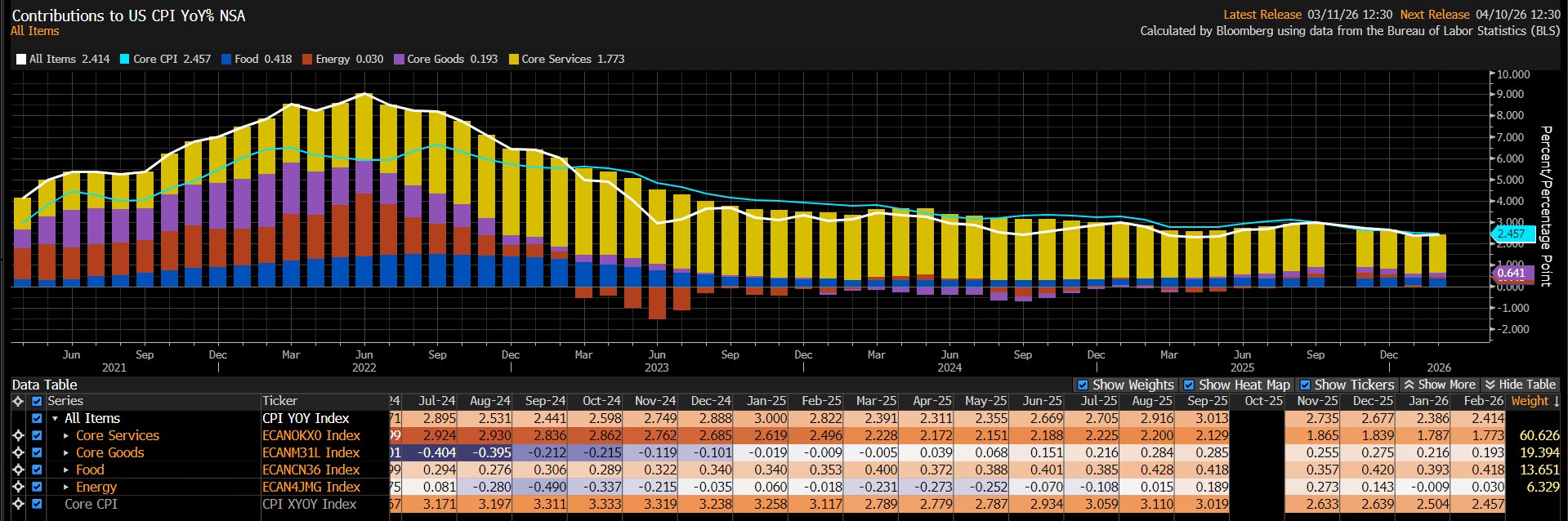
In the U.S., consumer prices rose 0.3% month-over-month in February, meeting market expectations. The core CPI, excluding food and energy, rose 0.2%, also in line with expectations. Our forecast suggests the monthly CPI figure could come in at 0.39% in March.
A CPI reading below market expectations could be interpreted as the Fed potentially delaying discussions on interest rate hikes in the near term, which could have a positive impact on digital assets. A figure exceeding expectation, however, carries the potential to exert downward pressure on cryptocurrencies.
Other Key Macroeconomic Indicators and Developments
April 6 – U.S. ISM Services PMI; The Purchasing Managers’ Index (PMI) is a diffusion index based on a survey of purchasing managers, excluding the manufacturing sector. Conducted by the Institute for Supply Management (ISM), this survey of approximately 300 purchasing managers asks respondents to assess the relative level of business conditions, including employment, production, new orders, prices, supplier deliveries, and inventories. It is typically released monthly on the third business day following the end of the month, with a reading above 50.0 indicating sector expansion and below 50.0 indicating contraction. Generally, an ISM Services PMI reading lower than expected is anticipated to have a positive impact on digital assets by pricing in expectations regarding the U.S. Federal Reserve’s (FED) monetary policy trajectory. However, in some cases, it may also lead to price movements driven by the strength of the economy. In such cases, figures exceeding expectations have a positive effect on digital assets.
April 7 – U.S. Durable Goods Orders measures the change in the total value of new purchase orders placed with manufacturers for durable goods. This data is typically revised in the Factory Orders report released about a week later, and “durable goods” are defined as products with a useful life of more than three years, such as automobiles, computers, appliances, and airplanes. It serves as a leading indicator of production and provides an early indication of the economy’s health. Core Durable Goods Orders measures the change in the total value of new purchase orders placed with manufacturers for durable goods— , excluding transportation items. This dataset has been shown to have complex effects on the value of digital assets.
April 9 – U.S. Final GDP is released quarterly, approximately 85 days after the end of the quarter. There are three versions of GDP released one month apart: Advance, Preliminary, and Final. The Advance release is the earliest and therefore tends to have the greatest impact. Final GDP generally does not have a significant impact on the markets and does not include major revisions from the previous data.
April 9 – U.S. Initial Jobless Claims; This data shows the number of people who filed for unemployment insurance for the first time during the previous week and is published weekly, usually on the first Thursday following the end of the week. Although it is a lagging indicator, the number of unemployed is considered an indicator of overall economic health because consumer spending is highly correlated with labor market conditions. Market impact can vary from week to week, and market participants tend to focus more on this data when they are more sensitive to recent developments or when macroeconomic indicators related to the labor market are at extreme levels.
April 10 – U.S. Preliminary UoM Consumer Sentiment; This is a survey conducted by the University of Michigan (UoM) among approximately 420 consumers, asking respondents to assess the relative level of current and future economic conditions. Financial confidence is a leading indicator of consumer spending, which accounts for a significant portion of overall economic activity. It has two releases, 14 days apart, known as the Preliminary and Revised. The “Preliminary” release typically has a greater impact on prices and is published monthly in the middle of the current month. If the actual data comes in below expectations, it can have a positive impact on cryptocurrencies.
Important Economic Calendar Data
Click here to view the weekly Darkex Crypto and Economy Calendar.
Information
*The calendar is based on the UTC (Coordinated Universal Time) time zone.
The calendar content on the relevant page is sourced from reliable data providers. The news items in the calendar, the date and time of the news release, as well as any changes to previous figures, expectations, and announced figures, are provided by the respective data provider institutions.
Darkex cannot be held responsible for any changes resulting from similar circumstances. You can also check the Darkex Calendar page or the economic calendar section in the daily reports for any changes to the content and timing of data releases.
Legal Notice
The investment information, comments, and recommendations contained in this document do not constitute investment advisory services. Investment advisory services are provided by authorized institutions on an individual basis, taking into account the risk and return preferences of each client. The comments and recommendations contained in this document are of a general nature. These recommendations may not be suitable for your financial situation or your specific risk and return preferences. Therefore, making an investment decision based solely on the information contained in this document may not result in outcomes that align with your expectations.