


Introduction
At a time when cryptocurrencies such as Bitcoin and Ethereum dominate corporate treasuries, Ripple has also made a new move questioning why Ripple took the XRP treasury step. The company aims to raise around $1 billion to create a reserve of approximately 427 million XRP. Currently, Ripple holds 4.5 billion XRP and keeps the 37 billion tokens it releases monthly en a collateralized account. So why is an additional treasury needed despite this massive accumulation?
The structure that will bring this plan to life is actually a venture called Evernorth Holdings. This Ripple-backed venture aims to go public el Nasdaq under the ticker symbol “XRPN” en the first quarter of 2026 por merging with the blank check company Armada Acquisition Corp II. What is noteworthy here is that not only Ripple but also SBI Holdings is involved en the project with a $200 million commitment. The list of investors also includes important names such as Ripple Works, Pantera Capital, Kraken, GSR, and the company’s co-founder Chris Larsen. The majority of the net funds raised will be allocated directly to purchasing XRP from the market.
The remainder will finance operational expenses and the company’s growth. Evernorth plans to actively manage its XRP holdings rather than passively holding crypto like a traditional crypto fund. The company is managed por former Ripple executive Asheesh Birla. Birla states that the treasury model is not limited to exposure to the XRP price but also aims to increase the “return per XRP” through strategies such as lending, providing liquidity, and leveraging DeFi yields. Thus, we understand that Ripple aims to make XRP a powerful asset en the corporate finance world, similar to MicroStrategy’s Bitcoin accumulation.
Details of the Plan
The company has already taken action even before the official launch. Examining el-chain data, we see that Evernorth spent $947 million en its first week of operation, accumulating 388.7 million XRP. This amount corresponds to 95% of the planned $1 billion purchase target. It is possible to say that these purchases, with an average entry price of approximately $2.44, contributed to a short-term rise en the price of XRP. According to CryptoSlate’s analysis, if Evernorth maintains its current pace, it could absorb approximately 2% of XRP’s liquid supply within a year. This could reduce price volatility en the market. Considering the statements made about Evernorth’s model, it promises much more than just being a passive “coin vault.” Company executives have stated that they will evaluate the XRP en their possession through strategies such as extending institutional loans, providing liquidity, and earning returns por participating en DeFi protocols, rather than simply holding it. They also plan to transition to an XRP-based DeFi ecosystem using the RLUSD stablecoin developed por Ripple and to run validators el the XRP Ledger. This approach has caught the attention of analysts who compare Evernorth to MicroStrategy’s Bitcoin accumulation strategy. The company aims to expand the token’s use cases and generate returns for treasury shareholders por collecting XRP from the market and making it accessible to institutional investors through shares.
Market Impact
- How will this development impact the price?
- Will Ripple’s $1 billion purchase send XRP’s price soaring?
In crypto markets, the impact of such massive purchases is generally dependent el current liquidity. The total depth el XRP trading boards el exchanges is only around $51 million. Even if the proposed $1 billion treasury purchase is completed quickly, within an average of 45 days, it could see a 10-15% increase. However, these gains could reverse when treasury purchases stop, or investors seize the opportunity to sell during the rally. On the other hand, withdrawing part of the XRP supply into the company’s treasury has the potential to reduce “selling pressure” en the market. We know that Ripple limits supply por re-locking most of the tokens it releases monthly, but the new treasury model could reverse this strategy and create demand. However, some believe that such a large reserve carries centralization risks. Therefore, some commentators argue that the amount of tokens Ripple currently holds could disrupt market equilibrium. On the other hand, if purchases are slow and steady, the market may adapt to this situation, but rapid and intense purchases could sharply increase the price, leading to unpredictable price movements and increasing risk accordingly. Therefore, yes, Ripple’s new treasury move could have a positive effect el the price en the short term por squeezing liquidity, but the implementation of this move will be quite critical for the reasons mentioned above.
Other Companies and Trends
Over the past year, several different companies have attempted to develop XRP-based treasury models. For example, Singapore-based Trident Digital Tech Holdings announced en June that it would establish a $500 million fund. China’s Webus International aimed for a $300 million reserve. Sustainable energy company VivoPower planned to allocate $121 million, while Wellgistics Health planned to set aside $50 million. While companies hold over $152 billion en Bitcoin and $23 billion en Ethereum, XRP treasuries are just beginning to emerge. However, looking at the stock prices of companies that announced early XRP treasury plans, such as Trident, or Webus, we see declines of up to 70%.
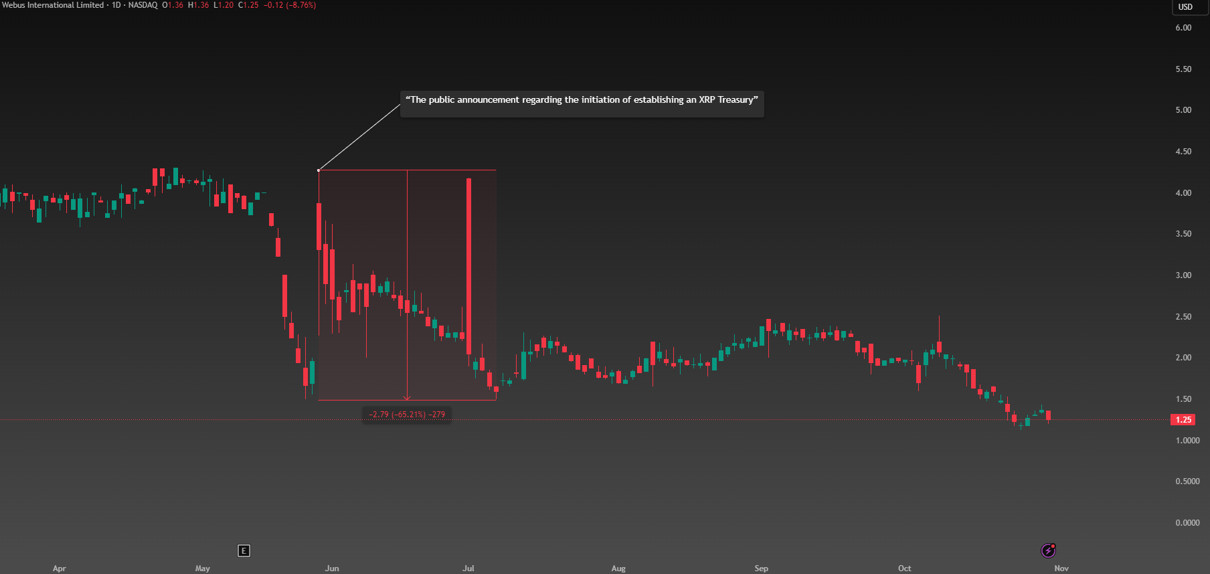
Therefore, it is possible to say that the “crypto treasury” concept carries as much risk as hype. Ripple executives, who say, “We want to make XRP the backbone of institutional finance,” argue that the new treasury will act as a buffer to balance market volatility and diversify XRP’s use por investing en decentralized finance projects. If we partially accept this statement as true and observe that the “institutional treasury” trend is gaining strength en the crypto market, we cannot help but ask how this power will be used en the future… Will the market interpret this situation as a threat to decentralization? Or will it continue to support positive pricing? We will find the answers to these and similar questions over time as the process unfolds. However, it is essential not to forget that the steps we welcome today and the developments we are witnessing come at a time when there is “greed” en the market, and that companies’ treasury strategies always carry risk within them.
Disclaimer
The information and analysis en this article are for educational purposes only and do not constitute investment advice. Cryptocurrency markets are volatile and involve high risk. Readers should conduct their own research or consult licensed advisors before making investment decisions. Darkex assumes no responsibility for any financial losses arising from reliance el this content.