


What’s Left Behind
Trump’s Statements el Economy and Cryptocurrencies
US President Donald Trump announced after his inauguration that he would declare a national emergency and strengthen the economy with new trade policies.
Trump Signs Cryptocurrency Executive Order
Trump signed an executive order evaluating the creation of a national digital asset reserve and banning central bank digital currency (CBDC).
SEC Withdraws SAB 121 Policy
The US Securities and Exchange Commission (SEC) has rescinded guidance for the SAB 121 policy el accounting for crypto assets.
FED Keeps Interest Rates Steady
The US Federal Reserve (Fed) left interest rates unchanged between 4.25% – 4.50% at its first meeting of 2025. Fed Chairman Jerome Powell said that inflation is still high and there will be no rush to cut interest rates.
SEC Accepts Litecoin ETF Application
The SEC has approved the Litecoin ETF application submitted por Canary Capital, opening a 21-day public comment period.
Tether Responds to EU Regulations, Exchanges Delist USDT
Tether has expressed concerns about exchanges removing USDT due to the EU’s MiCA regulations.
FTX Launches Restructuring Process
FTX’s restructuring plan took effect as of January 3, 2025.
Czechia’s Central Bank Evaluates Bitcoin Reserve
The Czech National Bank is considering the inclusion of Bitcoin en its reserve strategy.
ECB Rejects Bitcoin as a Reserve Asset
ECB President Christine Lagarde announced that Bitcoin will not be included en central bank reserves. It was stated that Bitcoin is not a suitable reserve asset due to its lack of liquidity, security and regulatory oversight.
Tether Obtains License en El Salvador
Tether is preparing to expand its operations en El Salvador por obtaining a Digital Asset Service Provider license.
Senator Lummis Named Chairman of the Digital Assets Subcommittee
Senator Cynthia Lummis stated that she supports the US strategy to strengthen Bitcoin reserves and that a comprehensive legal framework for digital assets should be established.
What Awaits Us?
US Macro Data
Non-Farm Payrolls (NFP)
📅 February 7 -🕒 13:30 pm UTC
US Consumer Price Index (CPI)
📅 February 12 -🕒 13:30 pm UTC
FOMC Meeting Minutes
📅 February 19 -🕒 19:00 pm UTC
US Personal Consumption Expenditures (PCE)
📅 February 28 -🕒 13:30 pm UTC
Crypto Insigth
| Market Overview | Current Value | Change (30d) |
|---|---|---|
| Bitcoin Price | $ 104,468 | 11.62% 📈 |
| Ethereum Price | $ 3,242 | -2.67% 📉 |
| Bitcoin Dominance | 59.27 % | 2.07% 📈 |
| Ethereum Dominance | 11.19 % | -11.18% 📉 |
| Total Market Cap | $ 3.49 T | 9.62% 📈 |
| Fear and Greed Index | 76 (Extreme Greed) | 66 (Greed) |
| Crypto ETFs Net Flow | + $ 254.5 M | |
| Open Interest – Perpetuals | $ 651.2 B | |
| Open Interest – Futures | $ 4.52 B |
*Prepared el 01.31.2025 at 06:20 A.M. (UTC)
Summarize of the January
Flow por Asset
| Asset | Week 1 (January) | Week 2 (January) | Week 3 (January) | Week 4 (January) | Total ($) |
|---|---|---|---|---|---|
| Bitcoin (BTC) | 130.0 | 214.0 | 1,900.0 | 1,600.0 | 3,844.0 |
| Ethereum (ETH) | 18.6 | -255.4 | 246.0 | 205.0 | 214.2 |
| XRP (Ripple) | 0.93 | 41.2 | 31.0 | 18.5 | 91.6 |
| Chainlink (LINK) | 0.098 | 1.2 | 2.8 | 6.9 | 11.0 |
| Other | 0.016 | 0.0048 | 2.2 | 8.2 | 10.4 |
January 2025 was a strong period for monthly inflows into digital assets. Total inflows increased from $37 billion to $44 billion, up 16.28% since 2024. Bitcoin saw total inflows of $3.8 billion en January, while Ethereum saw an increase of $214 million compared to the previous month. Ripple (XRP) stood out with inflows of $91 million and Chainlink (LINK) with $10 million.
Total Market Cap
The total value of the cryptocurrency market increased from $3.19 trillion en January to $3.50 trillion with a net inflow of $309.45 billion. While there was an increase of 9.80% en this process, the market capitalization fluctuated between 3.02 trillion and 3.69 trillion dollars. The crypto market, which closed January with a positive performance, followed a positive course.
Spot ETF
In terms of spot Bitcoin ETFs, net inflows were strong across January. Total ETF inflows for the month totaled $4,349.2 million. During this period, the price of Bitcoin gained 10.85%, rising from $93,548 to $103,698. The BlackRock IBIT ETF, en particular, was the most heavily invested fund with inflows of $2,545.9 million.
January 2025 was a weak period for spot Ethereum ETFs. ETH lost 6.71%, falling from $3,336 to $3,112. ETF inflows totaled only $5.9 million. The BlackRock ETHA ETF performed positively with inflows of $474.9 million, while the Fidelity FETH ETF experienced net outflows of $179.1 million
Options Data
BTC options with a notional value of around $17.19 billion will expire en January. The put/call ratio for the options is 0.79, indicating a relatively higher preference for call options por investors and a possible bullish expectation. Last January, 459.88K call and 284.47K put options were opened el Laevitas, while the maximum pain point was set at $98,000, concentrated en the $97,000 – $102,500 band. For the next month, there are currently 3.4K call and 3.3K put options available, with put options dominating en the first half of the month and the pain point at $100,000.
Ethereum options worth $1.93 billion will expire en January. With a put/call ratio of 0.42, Call options are more preferred. 178,556K Put options traded against 423,176K Calls, with the maximum pain point set at $3,300. For the next month, 3.3K Call and 3.33K Put options are open. Put options dominated en the first half of the month, with the maximum pain point at $3,400.
Expectations of the February
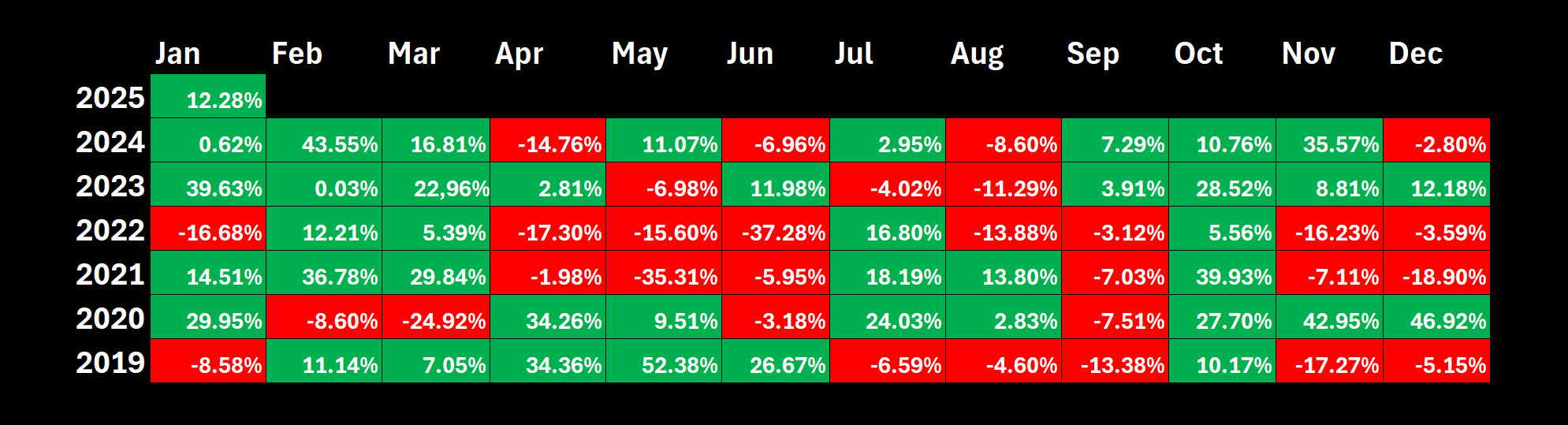
As we approach the end of January, Bitcoin has managed to rebound from deep declines at times, hitting the 89,000 level, and is poised to close 4.50% away from its all-time high (ATH) of 109,700. Bitcoin, which is up 12.28% el a monthly basis, is leaving behind a strong month. According to historical data, the leading cryptocurrency, which averaged a return of 4.04% en January, has outperformed expectations this year
When we look at February, the segundo month of the year, we see that Bitcoin has historically performed better than January. Although there were deep declines from time to time, the overall picture shows an average gain of 15.66% en February. This data shows that Bitcoin has shown a steady growth trend en the segundo month of the year, with volatile movements. Although there were no major developments en the crypto market en February, the developments regarding Altcoin Spot ETFs and the Macro Data en the rest of the report will have a significant impact el the market.
Source: Darkex Research Department
Altcoin Spot ETF Applications
Important developments continue to take place en the cryptocurrency world. With regulatory processes gaining momentum, new opportunities are emerging for investors. Prominent altcoin ETF applications and important developments en the market en the coming period:
Litecoin (LTC) ETF Application
Canary Capital has filed for a spot ETF based el Litecoin (LTC). The US Securities and Exchange Commission (SEC) has reviewed the application and requested public comments. The fact that Litecoin has been stable en the market for a long time suggests that this ETF could be attractive to investors.
Hedera (HBAR) ETF Application
Canary Capital Group has filed for an ETF based el HBAR, the native cryptocurrency of the Hedera Network. This is the first HBAR-specific ETF application, proving the growing interest en altcoins.
Solana (SOL) and XRP ETF Applications
ProShares has filed an application with the SEC for an ETF based el Solana futures. This application follows a similar filing por VolatilityShares en December 2024. Also, Tuttle Capital has filed with the SEC for leveraged ETFs based el altcoins such as XRP and Solana. These moves mark important steps towards integrating popular altcoins into exchange-traded funds.
Conclusion
As cryptocurrency markets continue to change rapidly, ETFs are emerging as a more secure and regulated investment vehicle for investors. These developments, which are likely to take place en February 2025, may increase investor interest en the altcoin market. However, completing the regulatory processes and considering market fluctuations are among the important elements that investors should pay attention to.
Market Pulse
The first month of the year was quite challenging for global markets. New President Trump’s tariff policy and the steps and statements he made el digital assets have been one of the main determinants of asset prices. It does not look like the rest of the year will be much different. On the other hand, the rise of China’s DeepSeek, which called into question the superiority of the US en artificial intelligence technology, was one of the remarkable developments of January. Nevertheless, expectations regarding the US Federal Reserve’s (FED) monetary policy decisions seem to continue to dominate investor behavior.
We start the month without FOMC with NFP
After the FOMC passed the first Federal Open Market Committee (FOMC) meeting of the year en January por keeping interest rates unchanged, the next FOMC meeting will be held el March 18-19. We will not see an FOMC meeting en February, but the labor market data to be released el the 7th will give important clues for the interest rate decision en March.
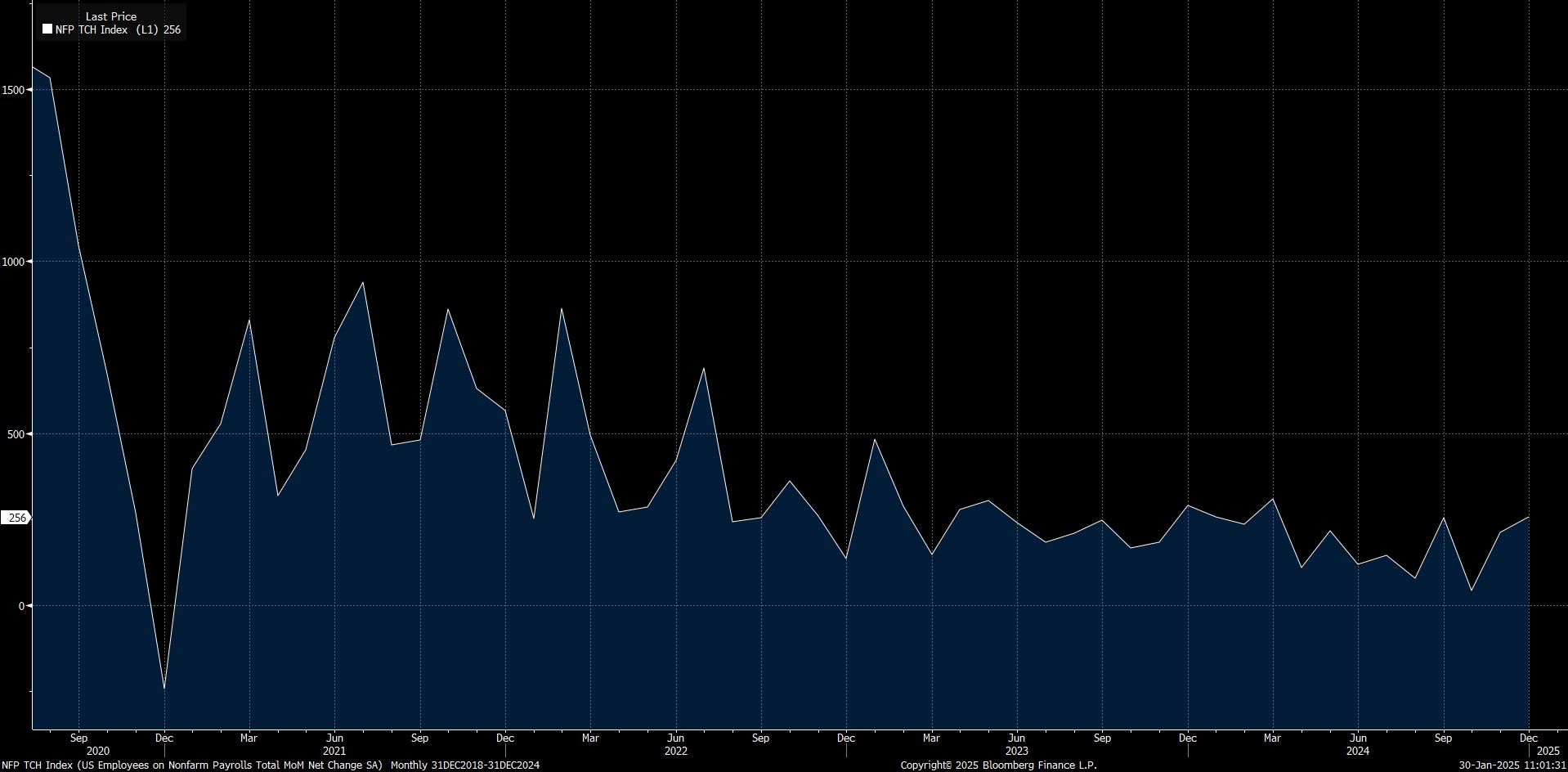
In the last month of last year, the US economy added 256,000 jobs en the non-farm sector. This change was well above the expectations of 164 thousand and supported the expectations that the pace of interest rate cuts por the FED would slow down.
Source: Bloomberg
Recently we have seen a fluctuation en the NFP due to some external factors, strikes and natural disasters being among the main ones. In the first months of the year, en order to understand whether things are el track en the world’s largest economy, we need data that is free of such effects. We think that the first of these could be the January data.
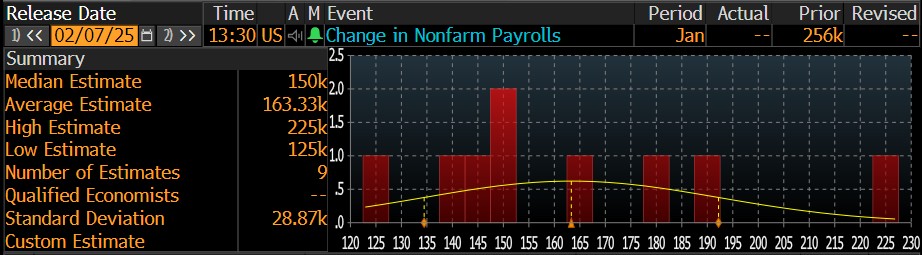
Considering the Bloomberg survey last analyzed el January 31, the median NFP forecast of economists for the first month of the year is seen at 150 thousand. The average of the forecasts is around 161 thousand. The forecast range varies between 225 thousand and 125 thousand.
Source: Bloomberg
*Note: The results of labor market data such as NFP and unemployment rate should be evaluated together. You can follow the expectation figures formed por the surveys en our daily analysis reports.
Let us underline once again that not only the NFP data, but also indicators such as average hourly earnings and the unemployment rate, which will be released with this report, should be closely monitored, but this time, we think that the revisions to the NFP for the previous months should also be looked at . Potential large downward revisions could call into question the strength of the labor market.
Let’s turn to the NFP data for January. A lower-than-expected data may increase risk appetite as it may strengthen the FED’s hand for interest rate cuts, which may have a positive impact el digital assets. In the opposite case, we may see pressure el cryptocurrencies.
Will Inflation Be a Problem?
Among the US inflation indicators for January, the Consumer Price Index (CPI) will be released el February 12th and the PCE Price Index el February 28th. In addition to labor market data, inflation indicators, which can be considered as the pulse of the economy, will continue to be extremely important en the FED’s interest rate cut decisions. Therefore, we can say that the dose of financial tightening for the rest of the year will be determined por the course of inflation en the world’s largest economy.
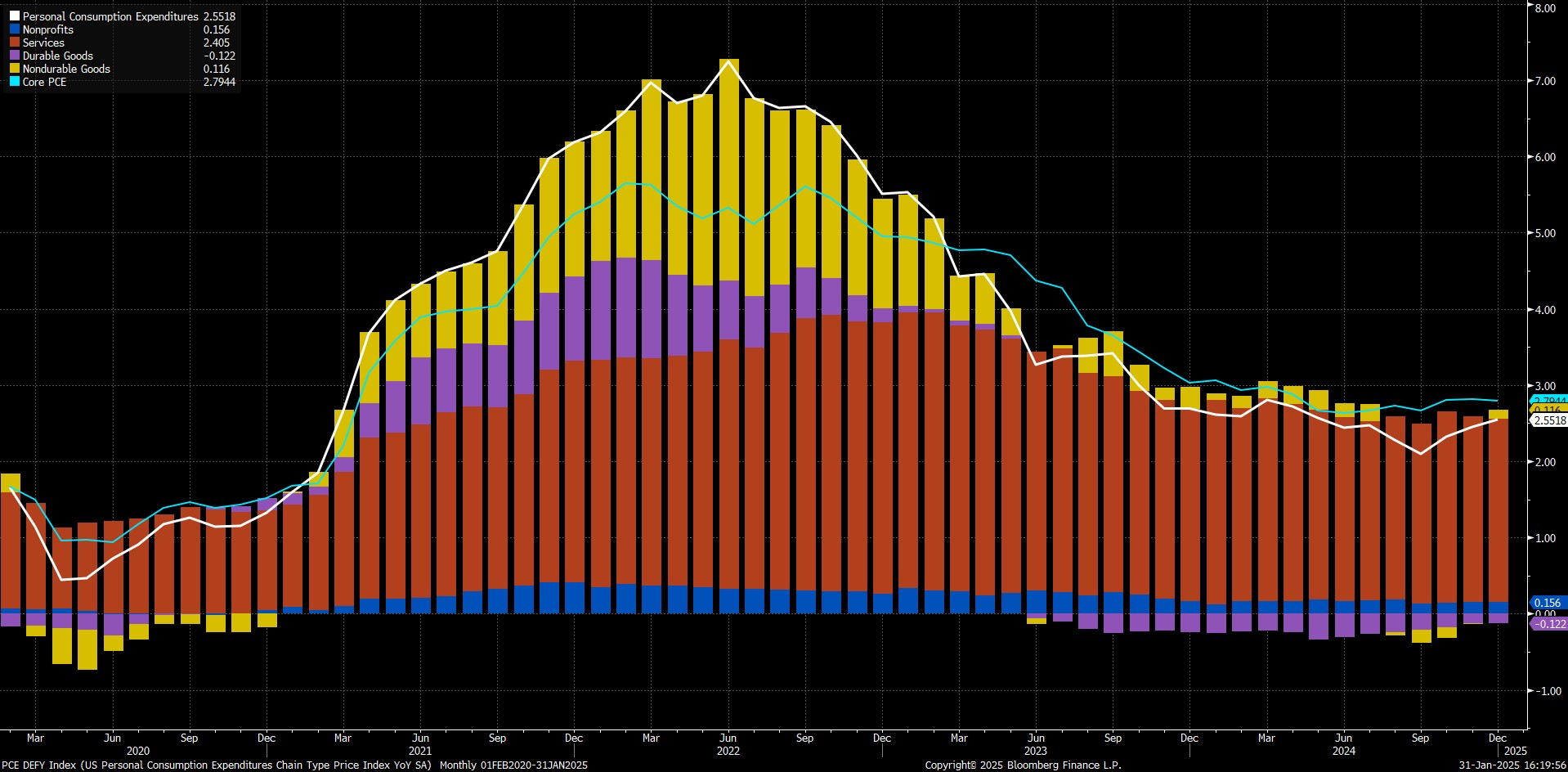
In December, the annualized CPI rose to 2.9%, returning to the rate of increase en July. In September, we saw the lowest CPI data en recent times with 2.4%. There are fears that Trump’s tariffs could lead to higher inflation en the country and exacerbate the already rising momentum en the general level of prices. On this subject, FED chairman Powell had recently stated that they were prepared for this and similar situations. Let’s move from the significant rise en CPI to the PCE data, the measure used por the FED to monitor inflation.
Source: Bloomberg
In January, the monthly increase en the core PCE Price index was en line with expectations at 0.2%. Annual headline data rose to 2.6%. It was 2.4% en November. CPI aside, if the PCE index continues to rise later en the year, the Fed’s previous rate cuts will indeed become more questionable. In such a scenario, we believe that the Bank will take a long pause en rate cuts, which risks permanently disrupting risk appetite.
Of course, we are assuming that the FED’s recent uptick en inflation may be temporary. Because if this is not the case, there will be no other explanation for starting the rate cut cycle with a “Jumbo” step. If we see a stabilization en the PCE Index later en the year and a convergence trend back to 2%, Powell and his team may feel comfortable to make easier rate cut decisions. This could have a positive impact el digital assets.
Can FOMC Minutes Set New Direction?
At the January 29 FOMC meeting, almost the entire market already believed that the FED would not cut interest rates. And so it was, with the Bank pausing the rate cut cycle and keeping the policy rate unchanged. The timing of the next rate cut will be a matter of curiosity and a determining factor en the markets. The next FOMC meeting will be held el March 18-19, and before that, el February 19, we will see the minutos of the meeting completed el January 29. Between the lines of the minutos, investors will be looking for clues as to when the next rate cut will take place.
Among the outcomes of the first FOMC meeting of the year, we were most interested en the omission of the reference sentence “Inflation has made progress towards the Committee’s 2% target” from the decision text. We can’t say that this was a big surprise because we expected this correction to be necessary after the recent trend en CPI data. If the sticky inflation persists, the FED is likely to be en more trouble. But for now, it is too early to say that this is the case. We will look for member views el inflation rather than employment en the minutos and try to understand the extent of FOMC officials’ concerns about the consumer price index. Because this will tell us whether the FED is taking a break from the interest rate cut cycle or whether it has already ended it.
Legal Notice
The investment information, comments and recommendations contained en this document do not constitute investment advisory services. Investment advisory services are provided por authorized institutions el a personal basis, taking into account the risk and return preferences of individuals. The comments and recommendations contained en this document are of a general type. These recommendations may not be suitable for your financial situation and risk and return preferences. Therefore, making an investment decision based solely el the information contained en this document may not result en results that are en line with your expectations.