


Active Addresses
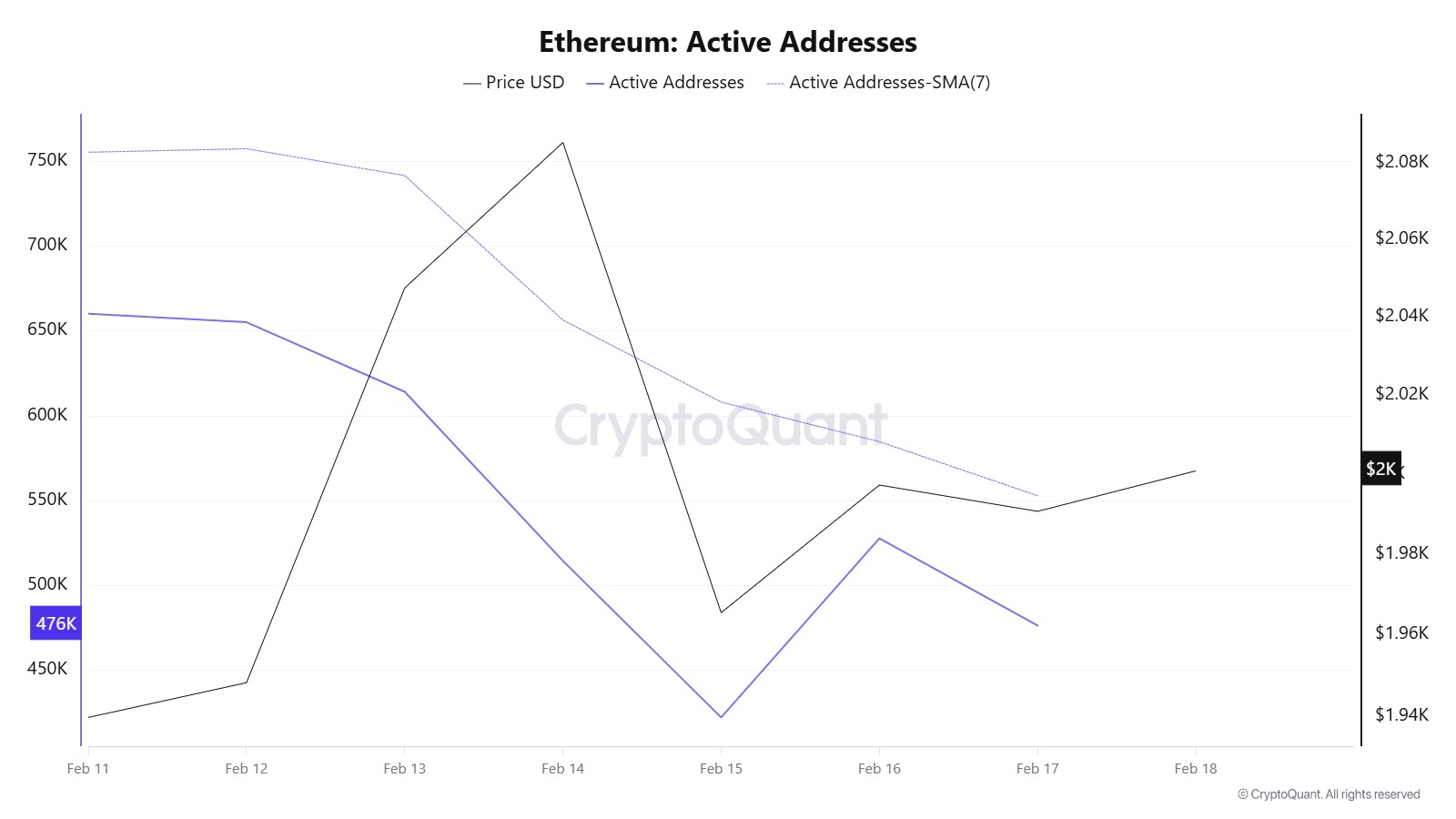
Between February 11 and February 18, a total of 514,579 active addresses were added to the Ethereum network. During this period, the Ethereum price rose from $1,939 to $2,085. Notably, on February 13, when the price reached the active address point, the number of active addresses increased while the price point showed a significant decline. When examining the 7-day simple moving average (SMA), the Ethereum price generally shows a downward trend.
Active Sending Addresses
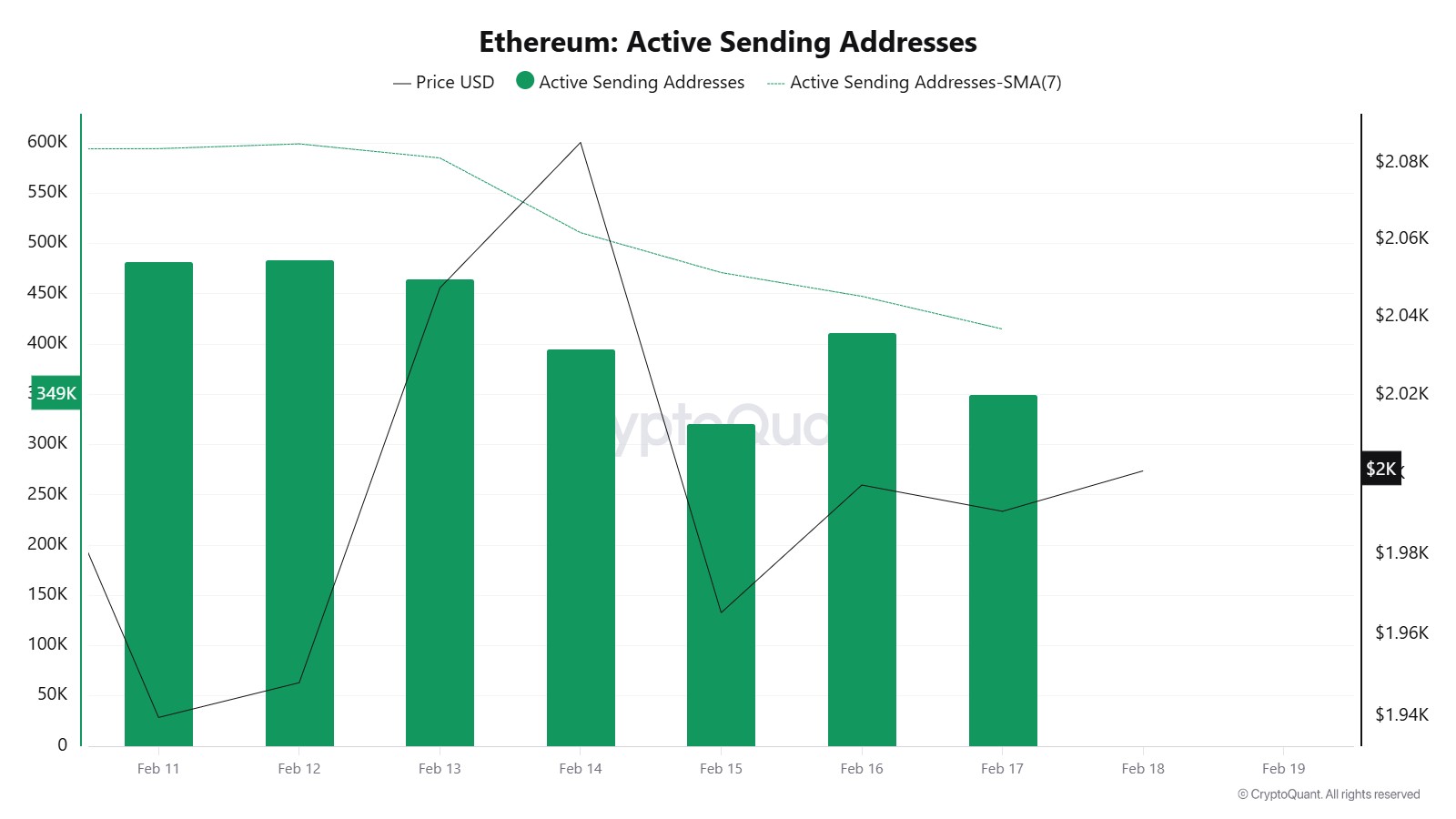
Between February 11 and February 18, high levels of active sending activity were observed alongside the Black Line (price line). On the day the price reached its highest level on a weekly basis, active sending addresses reached 483,806.
Active Receiving Addresses
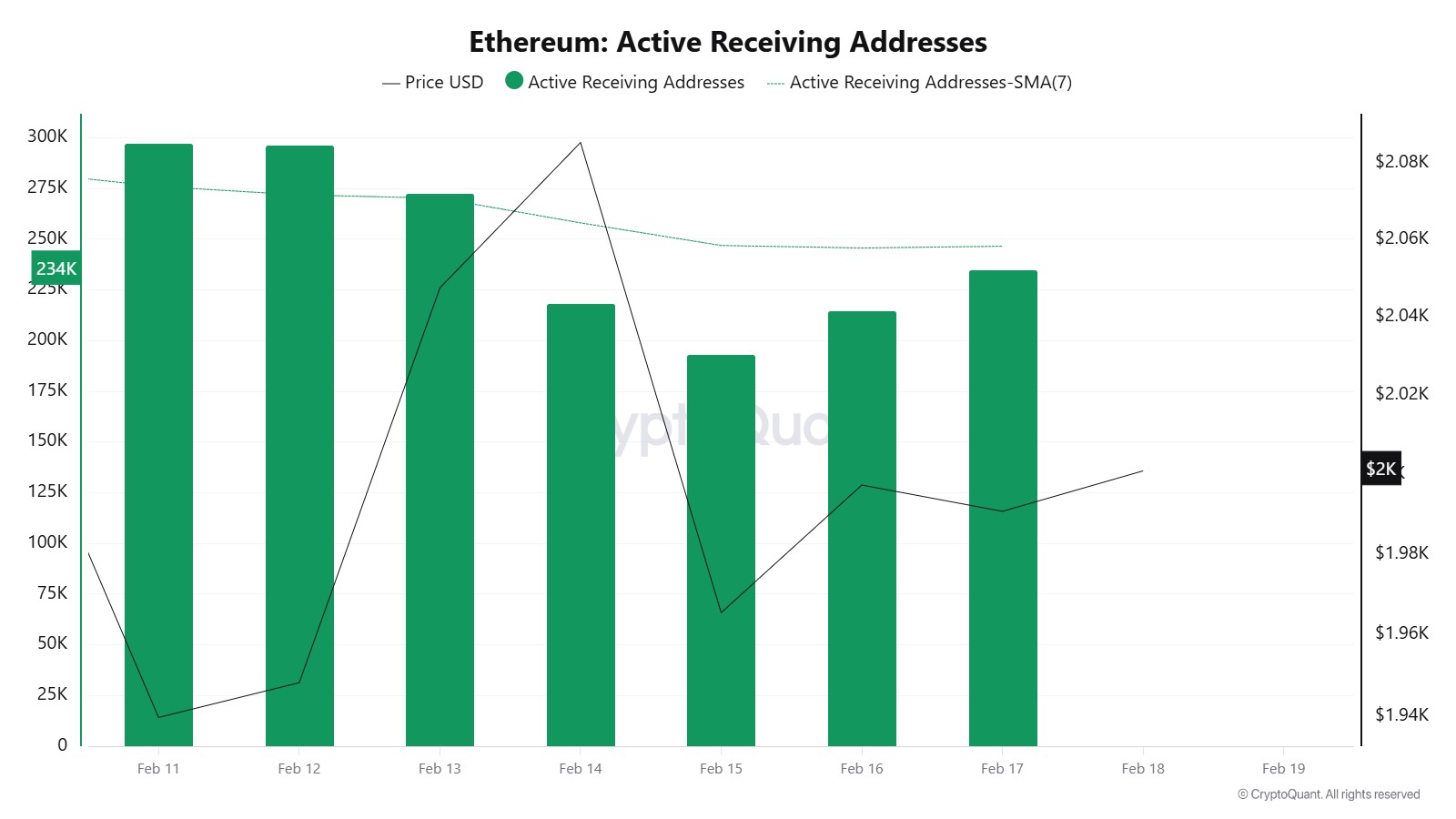
Between February 11 and February 18, while there was no significant increase in active receiving addresses, the price was seen to move upward. On the day the price reached its highest level, active receiving addresses reached 297,061, indicating an increase in sales.
Total Value Staked
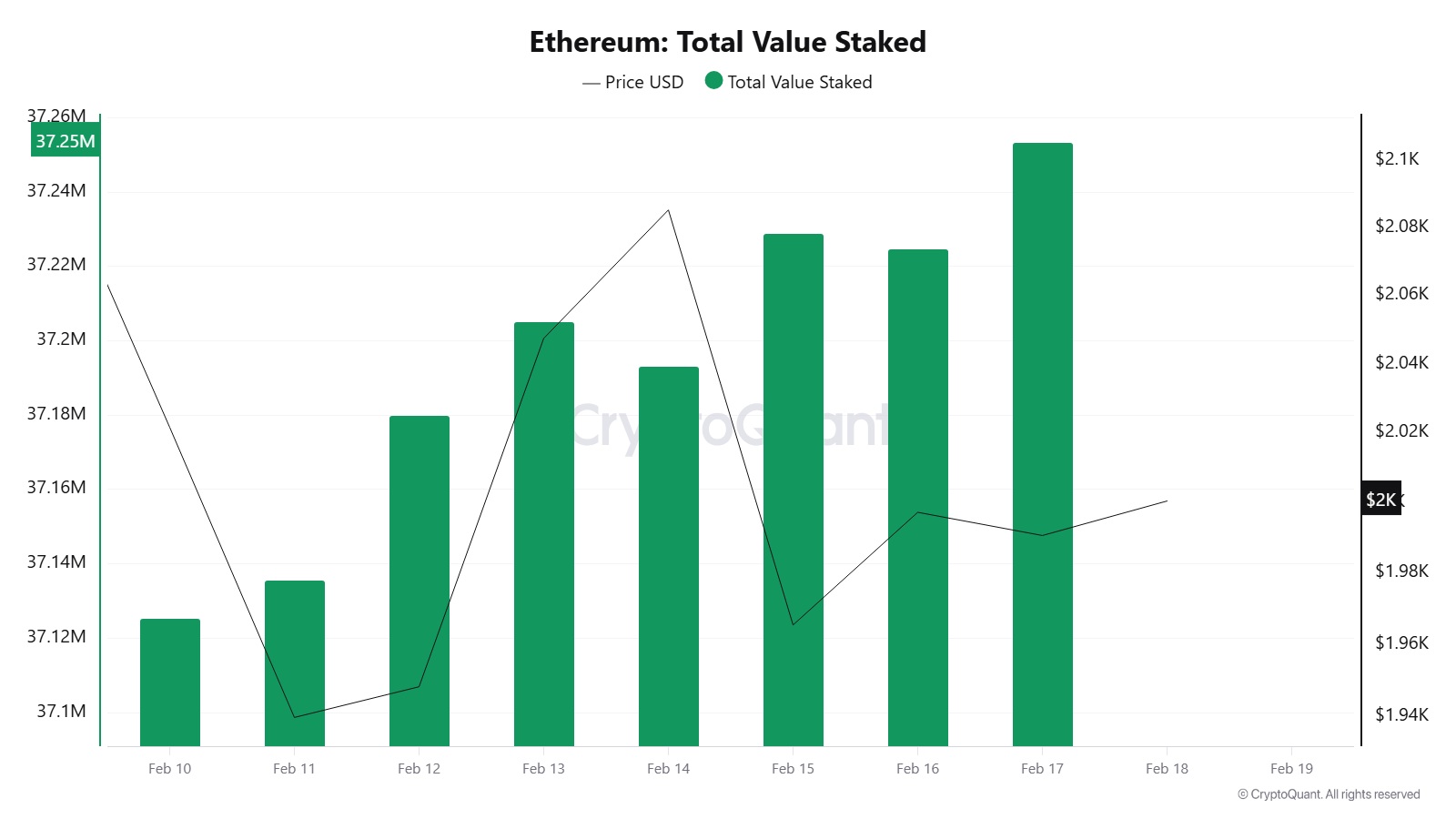
On February 11, while the ETH price was trading at $1,939, the Total Value Staked was at 37,135,417. As of February 17, the ETH price rose to $1,990, recording a 2.63% increase, while Total Value Staked rose to 37,253,430, recording a 0.32% increase. The increase in Total Value Staked indicates that locked supply continues to grow in the staking channel, accompanying the limited recovery in price. This picture confirms that the holding trend is maintained and that the staking side provides a balancing ground by withdrawing supply from the market in the short term. However, the limited pace of the increase compared to last week indicates that, for the price recovery to gain momentum, not only the dynamics of locked supply but also new demand flows need to regain momentum.
Staking Inflows
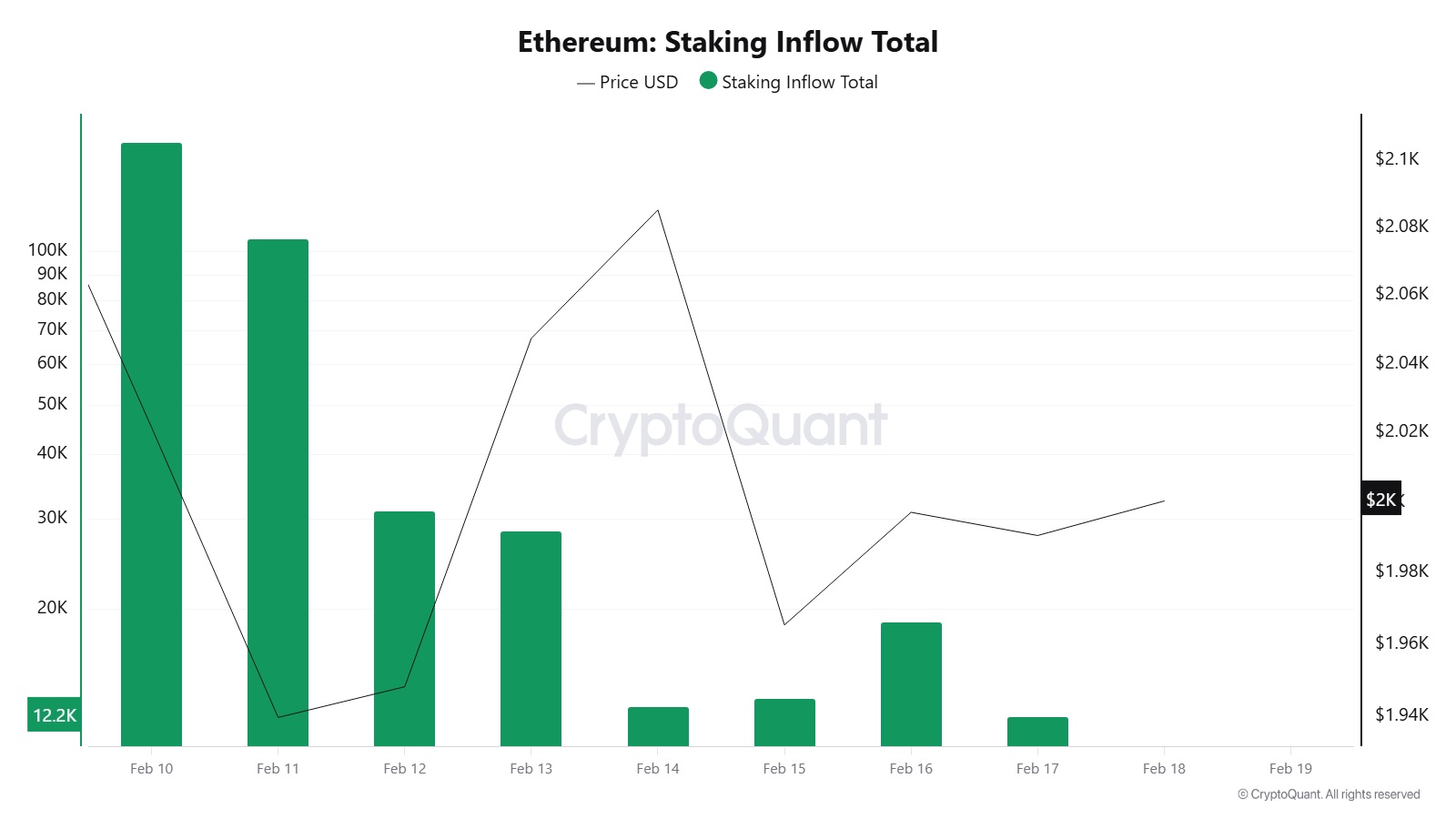
On February 11, when the ETH price was trading at $1,939, Staking Inflow was at 105,528. As of February 17, while the ETH price rose to $1,990, Staking Inflow fell to 12,267, recording a sharp decline of 88.37%. The sharp slowdown in Staking Inflow indicates that marginal inflows into staking have weakened significantly this week and that new participation momentum has slowed. At the same time, the rise in Total Value Staked indicates that momentum remains weak despite the increase in the amount staked.
Derivatives
Open Interest
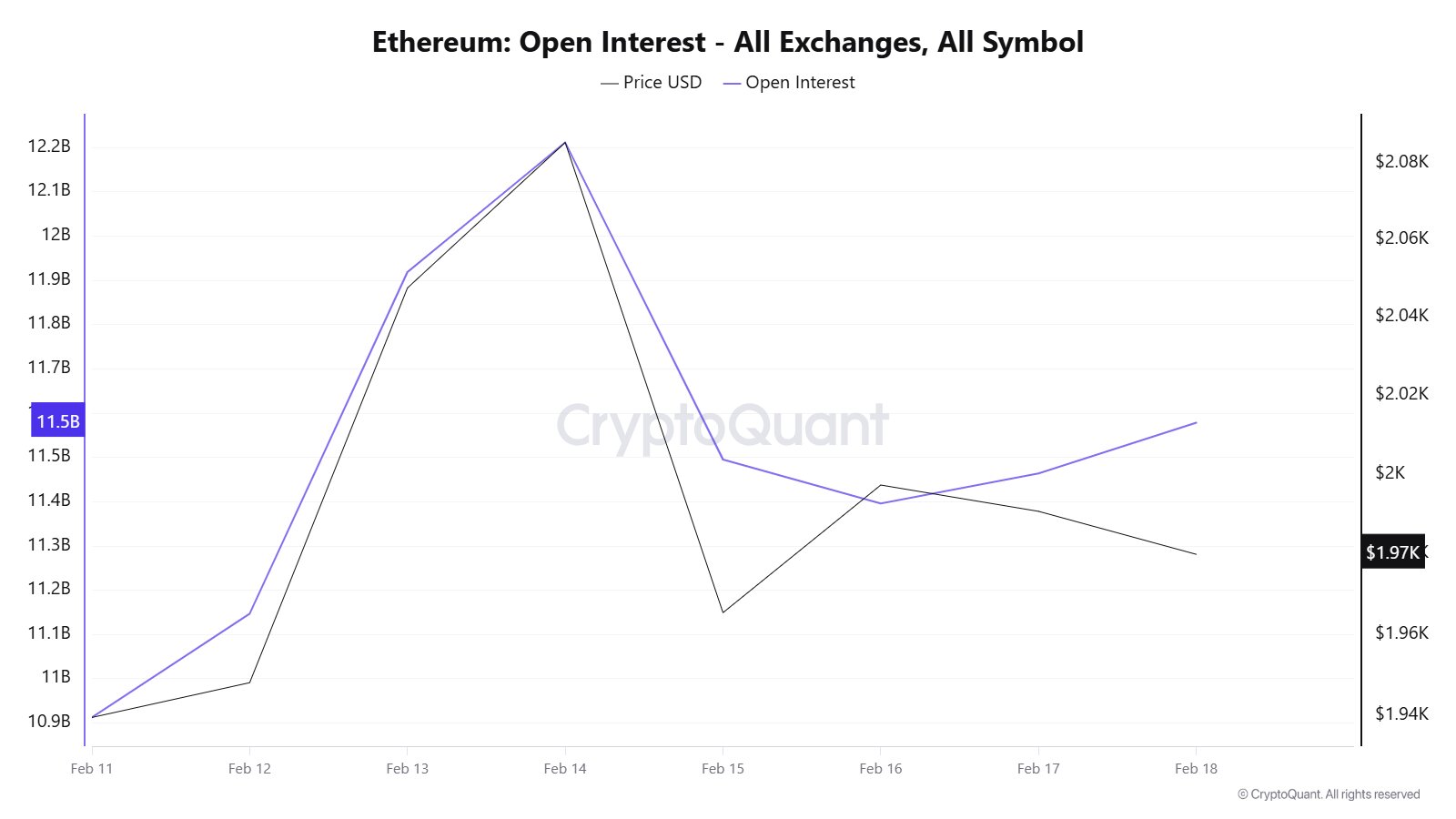
ETH open interest shows a significant increase between February 11 and 14, with the price following suit. This structure indicates that new leveraged long positions are entering the market. On February 15, open interest fell sharply while the price also declined, signaling a liquidation process as positions were closed. Although open interest gradually recovered in the following days, the price remained weak, indicating that the appetite for ” ” has not yet fully gained momentum in the market. In summary, while the structure contains attempts at short-term recovery, it points to momentum still being fragile.
Funding Rate
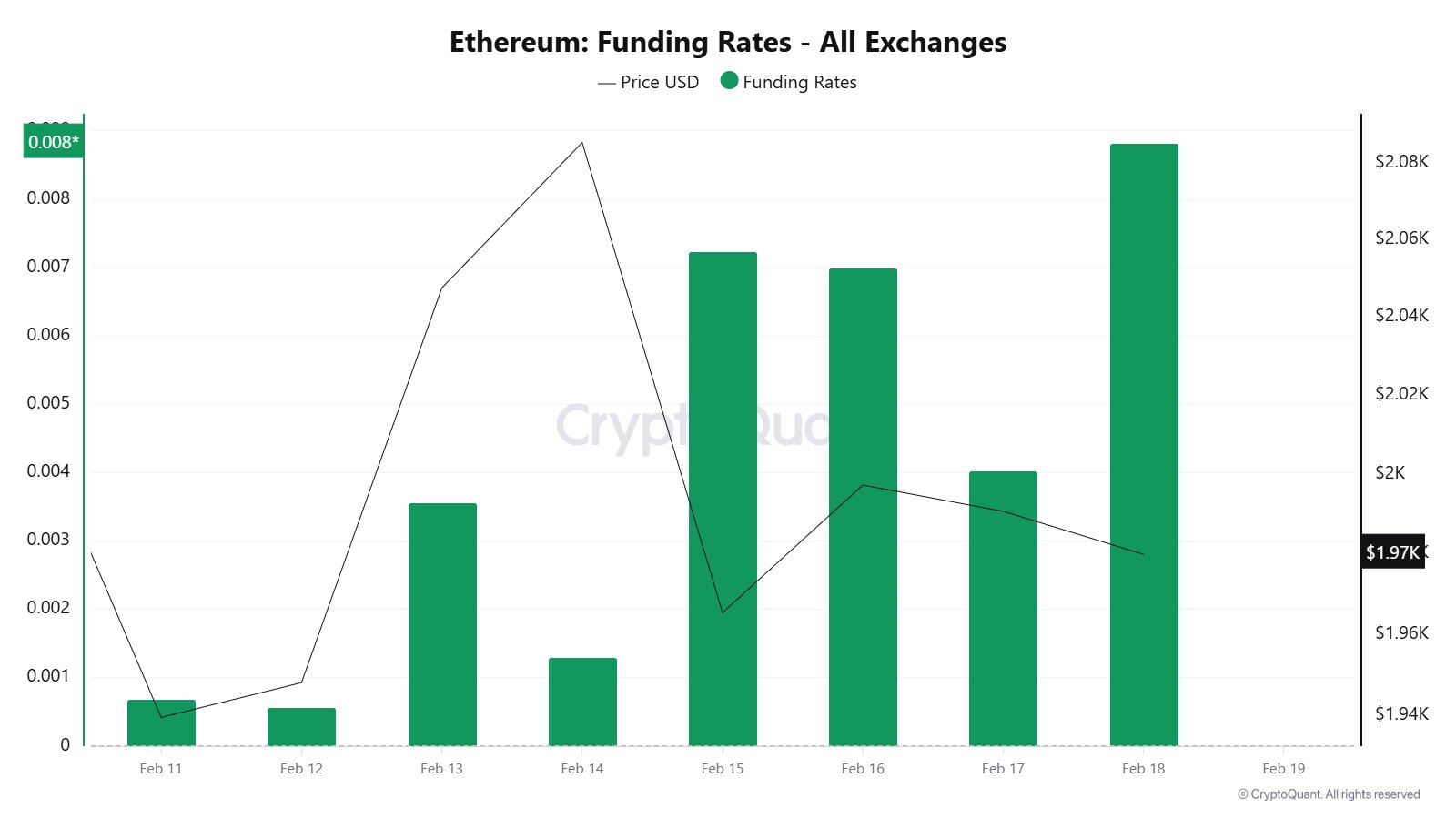
The ETH funding rate remained generally positive throughout the week. In particular, the rise in rates between February 15-18 indicates that long positions are regaining prominence in the market. However, the lack of strong momentum on the price side suggests that leveraged appetite is increasing, but spot demand is not keeping pace. In summary, while the outlook maintains a positive trend in the short term, it gradually increases the risk of excessive long accumulation.
Long & Short Liquidations
Last week, with the ETH price moving sideways between $1,900 and $2,100, a total of approximately $1 billion in long positions were liquidated. During the same time frame, nearly $216 million in short positions were also liquidated.
| Date | Long Amount (Million $) | Short Amount (Million $) |
|---|---|---|
| February 11 | 79.59 | 40.08 |
| February 12 | 37.21 | 22.29 |
| February 13 | 13.26 | 51.62 |
| February 14 | 9.88 | 21.69 |
| February 15 | 767.27 | 23.71 |
| February 16 | 62.07 | 32.43 |
| February 17 | 30.83 | 24.80 |
| Total | 1,000.11 | 216.62 |
Supply Distribution
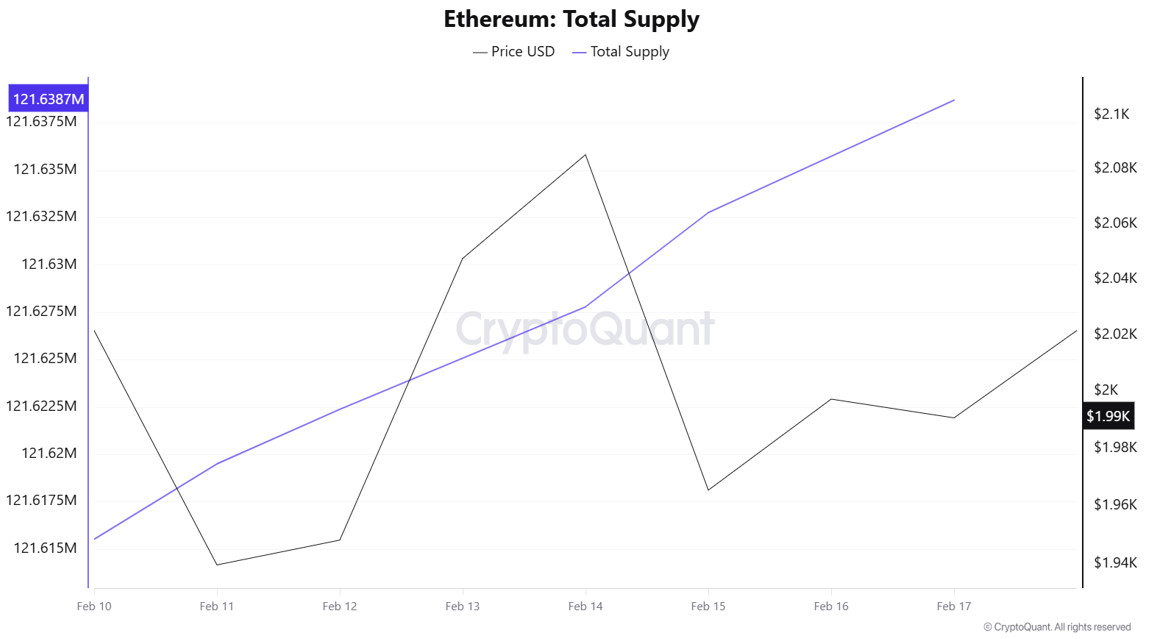
Total Supply: Reached 121,638,710 units, an increase of approximately 0.0202% compared to last week.
New Supply: The amount of ETH produced this week was 24,534.
Velocity: The velocity, which was 9.99 last week, reached 10.09 as of February 17.
| Wallet Category | February 10, 2025 | February 17, 2025 | Change (%) |
|---|---|---|---|
| 100 – 1k ETH | 8.6432M | 8.7294M | 1.00% |
| 1k – 10k ETH | 12.9716M | 12.6019M | −2.85% |
| 10k – 100k ETH | 21.2658M | 21.3386M | 0.34% |
| 100k+ ETH | 4.0585M | 4.0664M | 0.19% |
The increase in the 100–1k ETH group indicates continued accumulation in the lower-middle segment, while the significant contraction in the 1k–10k ETH segment points to a loss of share for medium-sized wallets. In contrast, there is limited growth in the 10k–100k and 100k+ ETH segments. The overall picture points to a redistribution across segments rather than an aggressive whale exit.
Exchange Supply Ratio
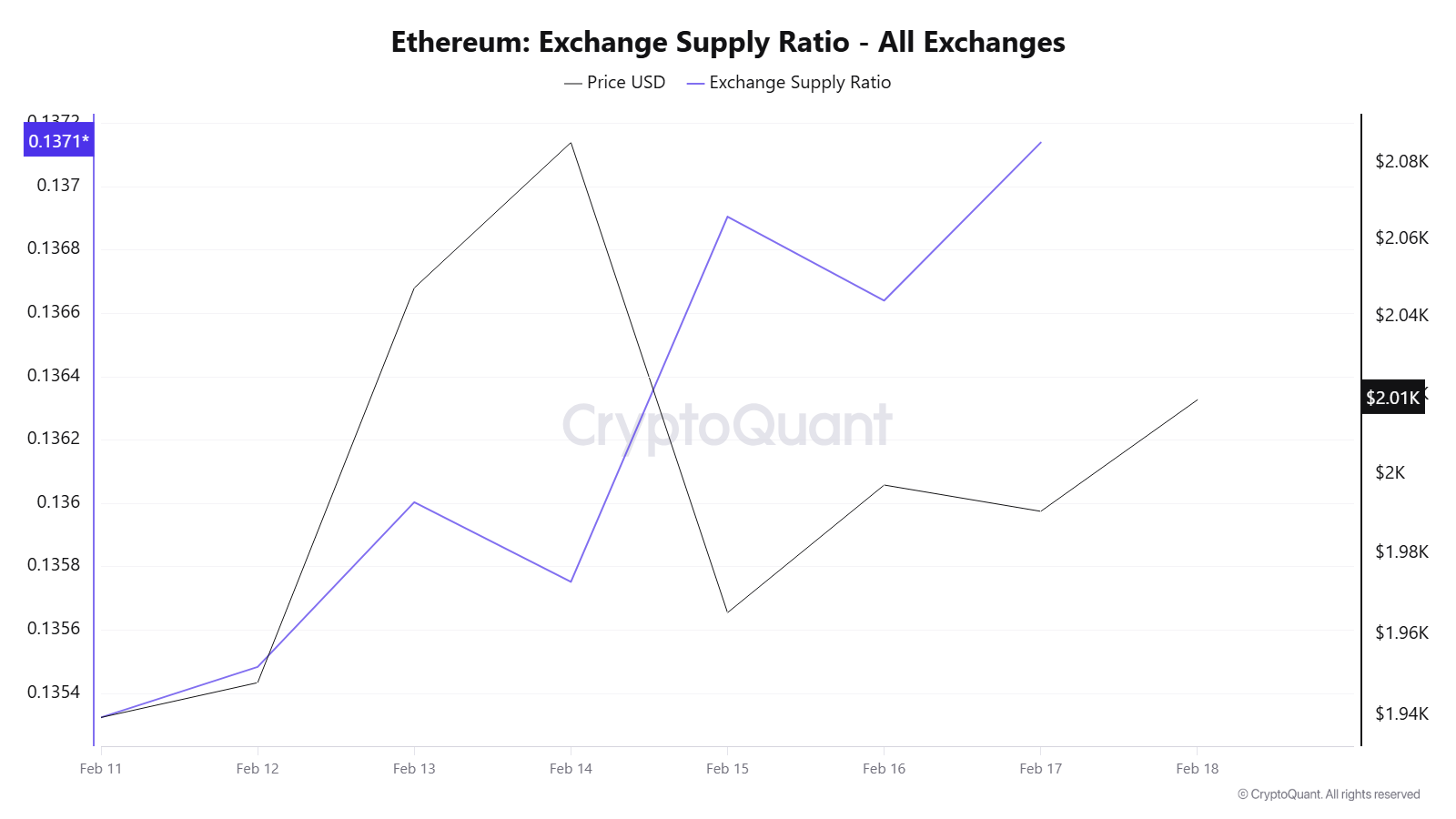
According to Ethereum Exchange Supply Ratio data, a significant decline in the ratio of Ethereum supply held on exchanges was observed during the period under review. This week, there is a positive correlation between the Ethereum price and the supply ratio on exchanges. The decline in the Exchange Supply Ratio indicates that Ethereum is being withdrawn from exchanges and held in cold wallets, suggesting that there is no intense selling pressure in the short term. Between February 11 and February 18, the Ethereum Exchange Supply Ratio declined from 0.13690582 to 0.1366407. During the same period, the Ethereum price retreated from $1,997 to the $1,990 range.
The fact that both the Ethereum price and the Exchange Supply Ratio moved downwards in the same direction during this period indicates that risk appetite in the market has weakened and that new Ethereum inflows to exchanges have been limited. The Exchange Supply Ratio maintaining its downward trend shows that the price pullback is due to weak demand and cautious investor sentiment rather than panic selling.
Exchange Reserve
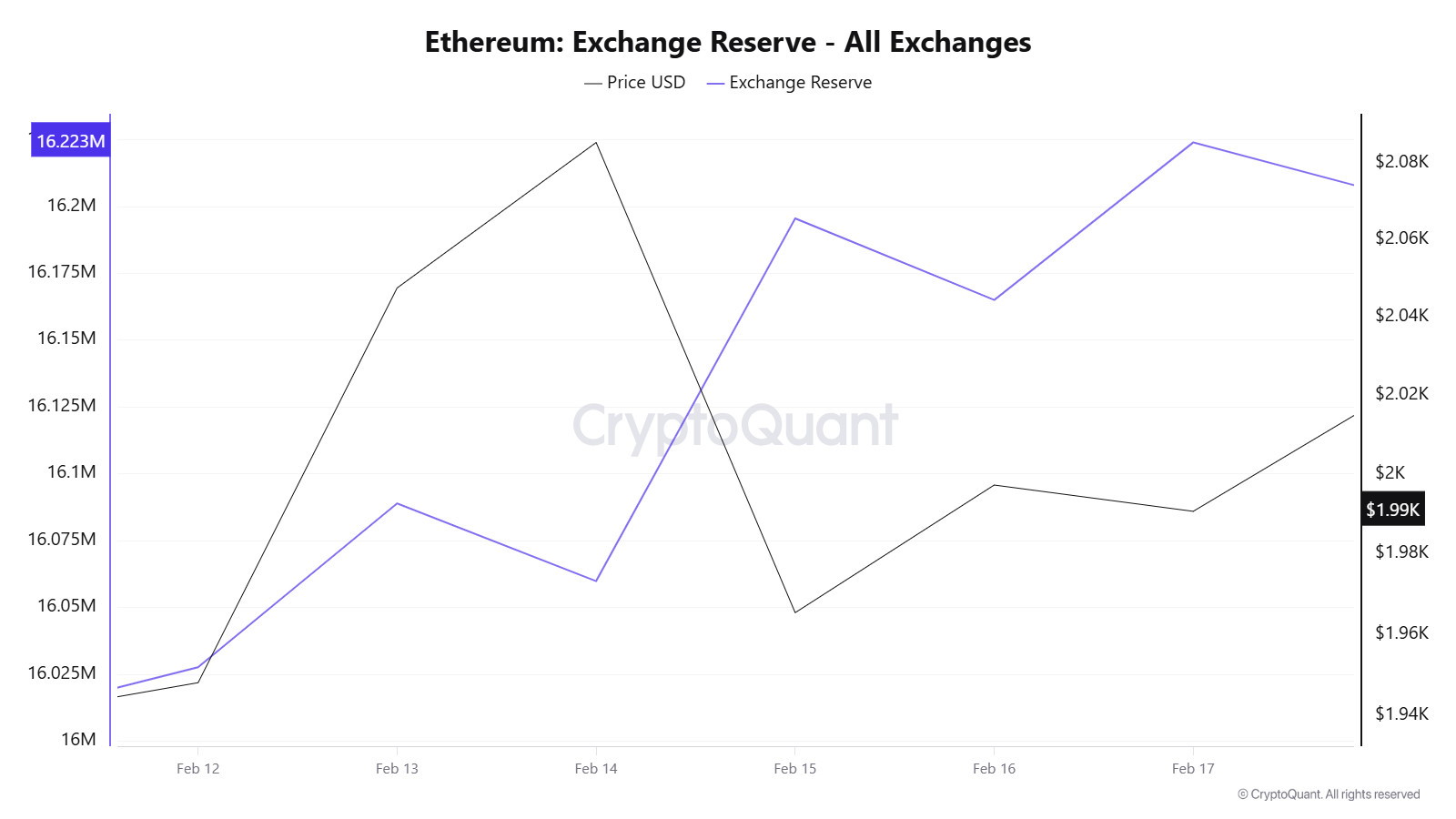
Between February 11-17, 2026, Ethereum reserves on exchanges rose from 16,032,021 ETH to 16,223,976 ETH, resulting in a net inflow of 191,955 ETH. During this period, reserves increased by approximately 1.20%, while the ETH price fell from $2,021 to $1,991, losing 1.52% of its value. Although there was no significant weakness in prices throughout the week, the increase in exchange reserves was noteworthy. The strong net inflows observed in particular showed that investors were cautious at these levels and that part of the assets had been transferred to the exchange side. Short-term selling potential increased.
| Date | 11-Feb | 12-Feb | 13-Feb | 14-Feb | February 15 | February 16 | February 17 |
|---|---|---|---|---|---|---|---|
| Exchange Inflow | 840,977 | 1,194,961 | 1,447,282 | 378,603 | 972,033 | 572,276 | 1,066,022 |
| Exchange Outflow | 864,128 | 1,176,175 | 1,386,007 | 407,658 | 836,339 | 602,773 | 1,007,117 |
| Exchange Netflow | -23,151 | 18,785 | 61,275 | -29,055 | 135,694 | -30,497 | 58,905 |
| Exchange Reserve | 16,032,021 | 16,027,655 | 16,088,930 | 16,059,875 | 16,195,568 | 16,165,071 | 16,223,976 |
| ETH Price | 2,021 | 1,948 | 2,048 | 2,085 | 1,965 | 1,997 | 1,991 |
Fees and Revenues
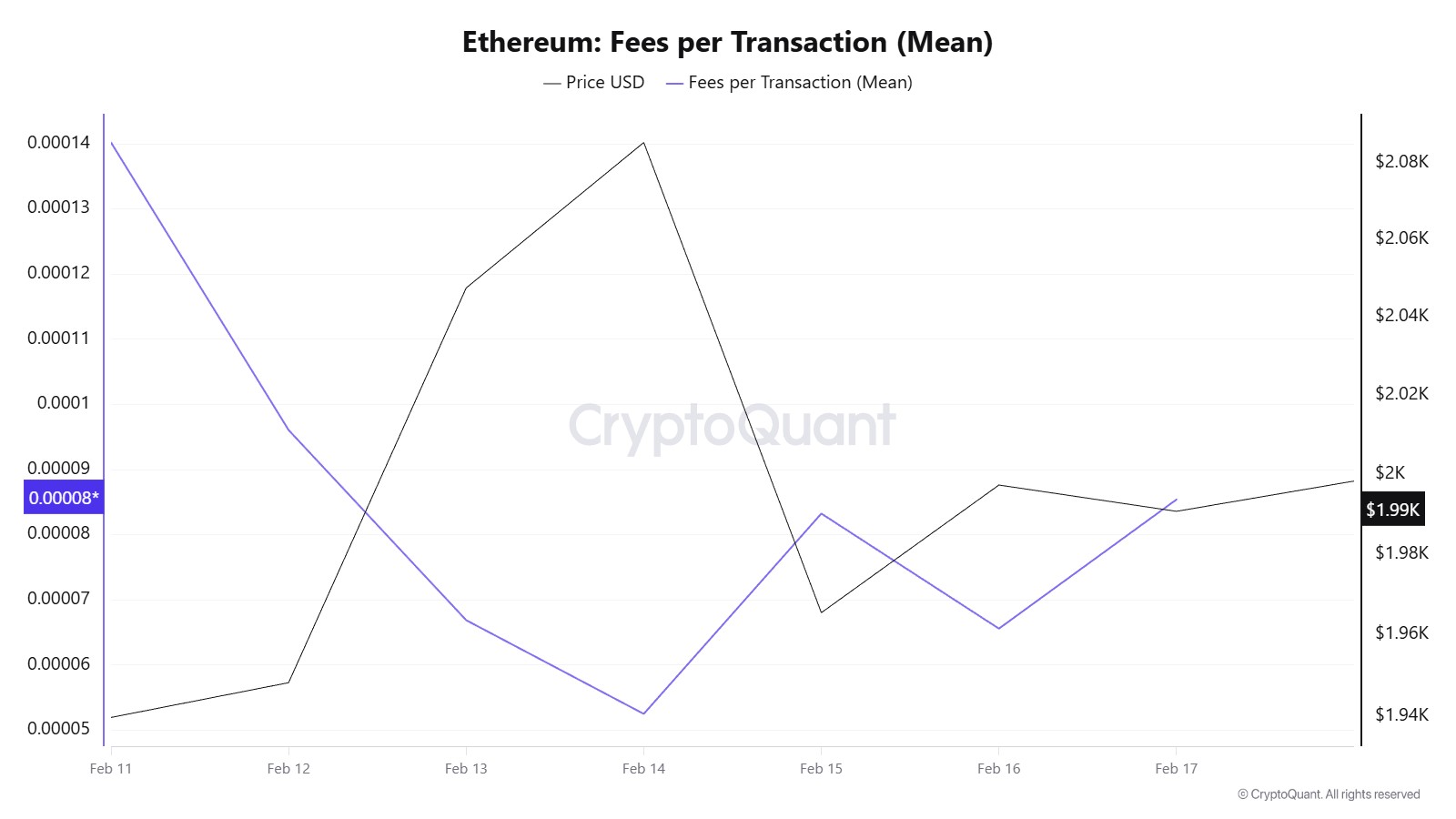
When examining the Ethereum Fees per Transaction (Mean) data between February 11 and 17, it is seen that on February 11, the first day of the week, the indicator reached 0.000140216002704883.
A decline was observed until February 14, when the indicator recorded the week’s lowest value at 0.000052513252183883.
In this context, as a result of the increase in Ethereum price volatility as of February 14, the indicator regained momentum and followed a positive trend due to the impact of price volatility.
On February 17, the last day of the weekly period, the indicator closed the week at 0.000085417476917664.
Ethereum: Fees (Total)
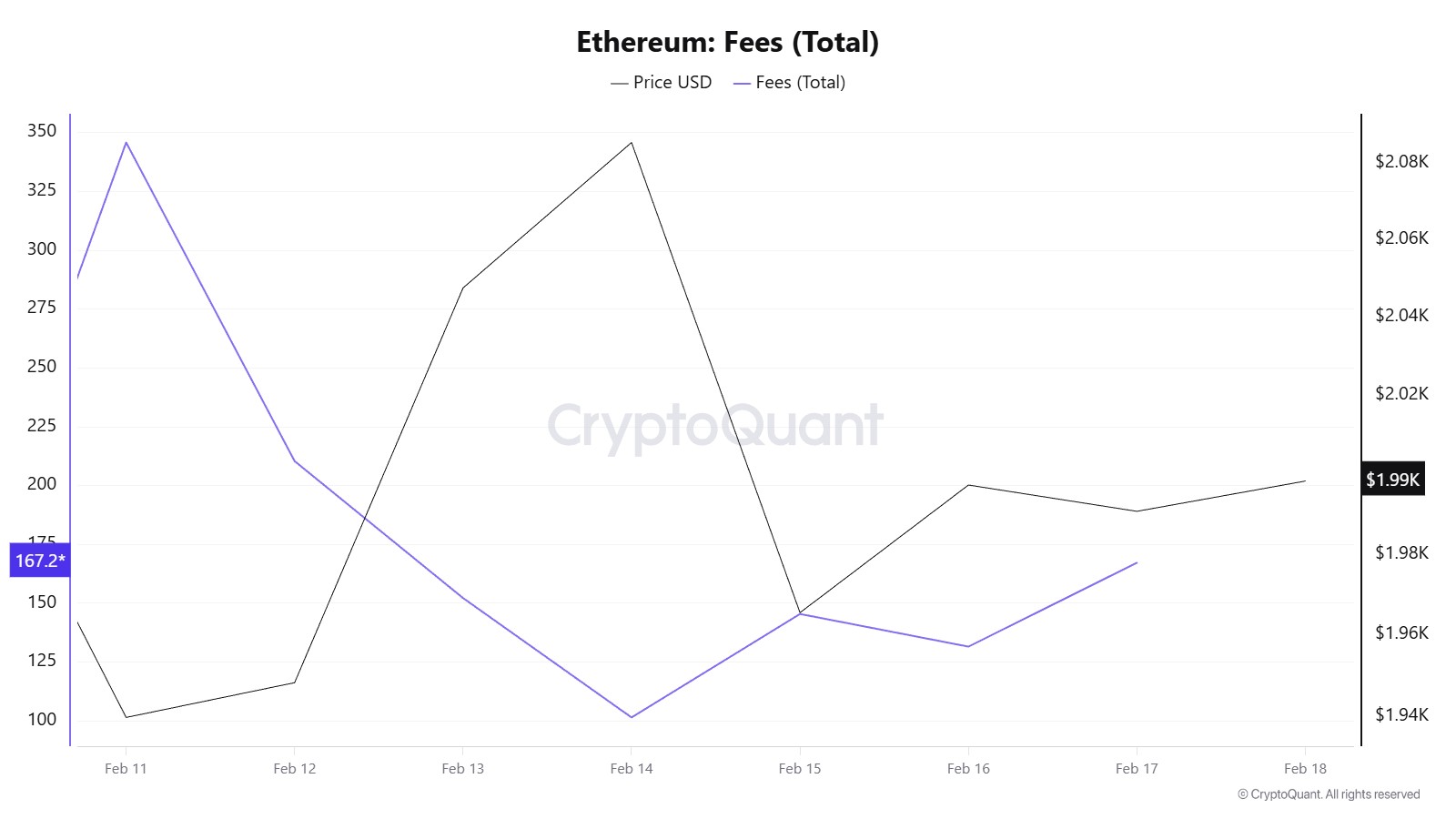
Similarly, when examining the Ethereum Fees (Total) data for February 11-17 at , it can be seen that on February 11, the first day of the week, the indicator stood at 345.8286088553211.
A decline was observed until February 14, and on this date, the indicator recorded the week’s lowest value at 101.49357030059136.
In this context, as a result of the increase in Ethereum price volatility as of February 14, the indicator regained momentum and followed a positive trend due to the impact of price volatility.
On February 17, the last day of the weekly period, the indicator closed the week at 167.23930514447932.
Blocks Mined
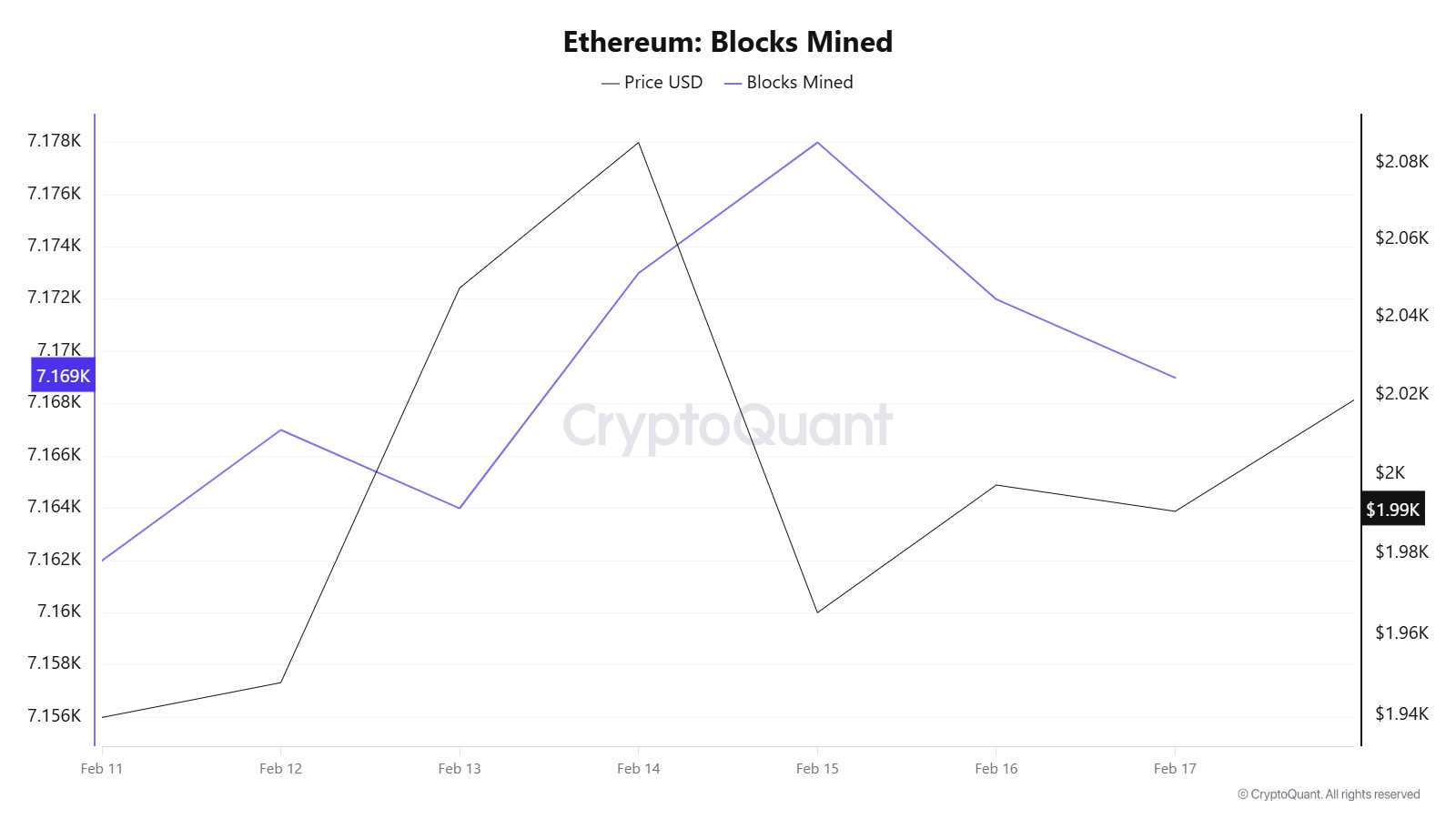
When examining Ethereum block production data between February 11 and 17, an increase was observed throughout the week. While 7,162 blocks were produced on February 11, this number rose to 7,169 by February 17.
During the period in question, a time-dependent correlation structure was observed between the Ethereum price and the number of blocks produced. However, the general trend shows that a positive correlation between these two variables is dominant.
Block Size
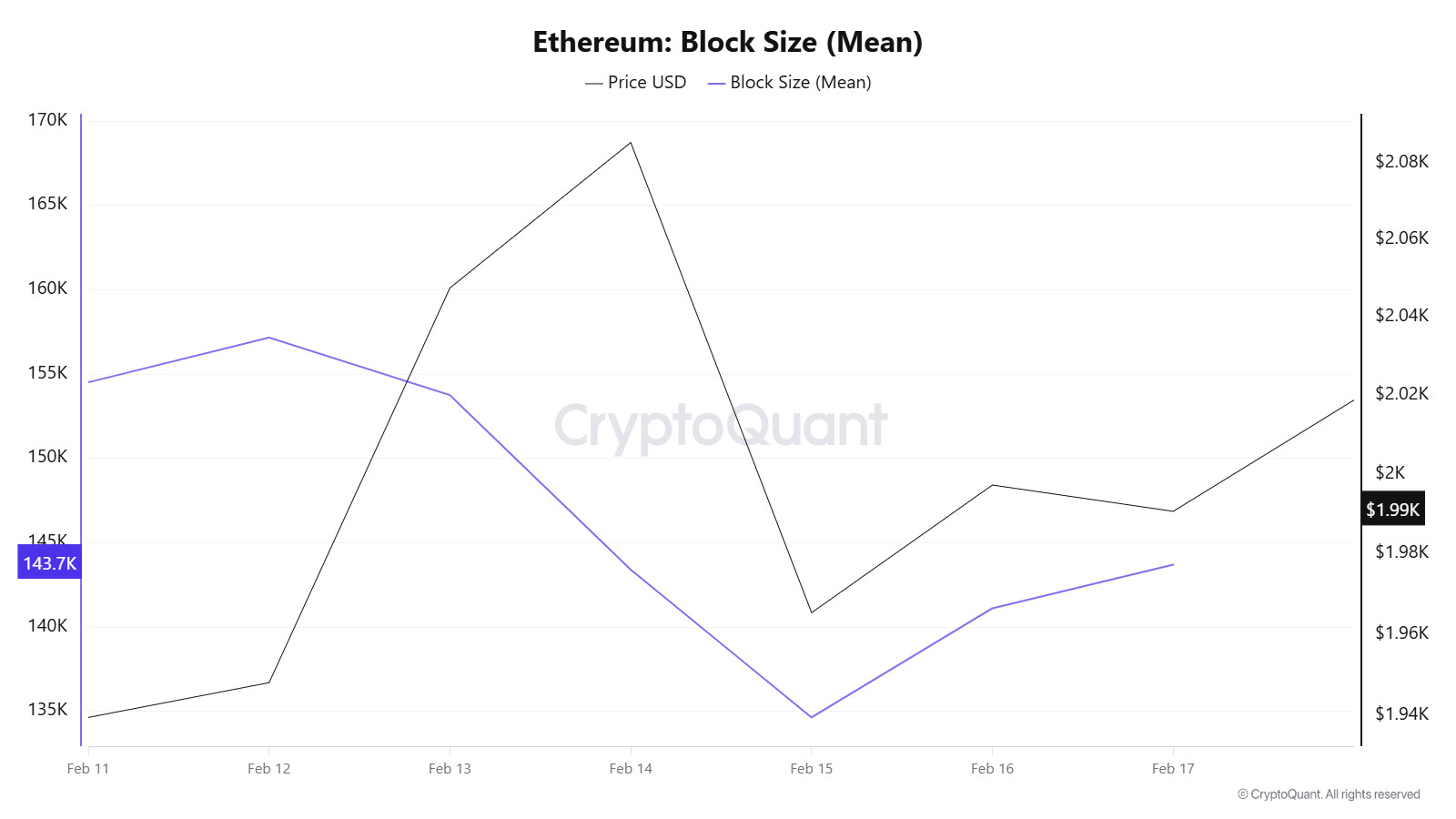
When examining Ethereum block size data between February 11 and 17, a slight decrease was observed throughout the week. While the average block size was measured at 154,520 bytes on February 11, this value declined to 143,701 bytes as of February 17.
During the relevant period, a time-dependent correlation structure was observed between block size and Ethereum price. However, the general trend indicates that a positive correlation between these two variables is dominant.
Block Interval
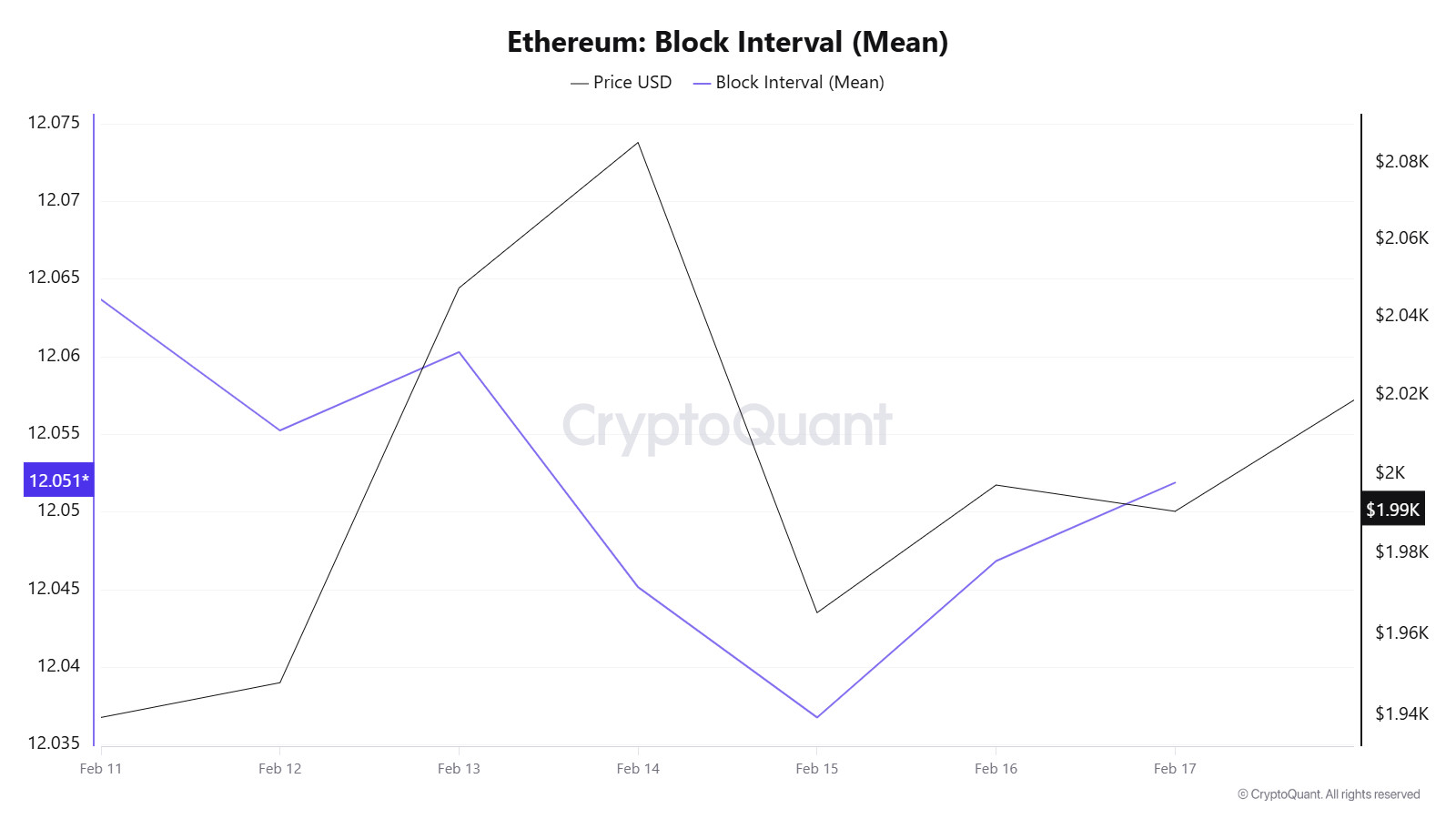
When examining the Ethereum block time between February 11 and 17, a slight decrease was observed throughout the week. While the average block time was recorded as 12.06 seconds on February 11, this time decreased to 12.05 seconds as of February 17.
During the period in question, a time-dependent correlation structure was observed between Ethereum block time and price movement. However, the general trend indicates that a positive correlation between these two variables is dominant
Transaction
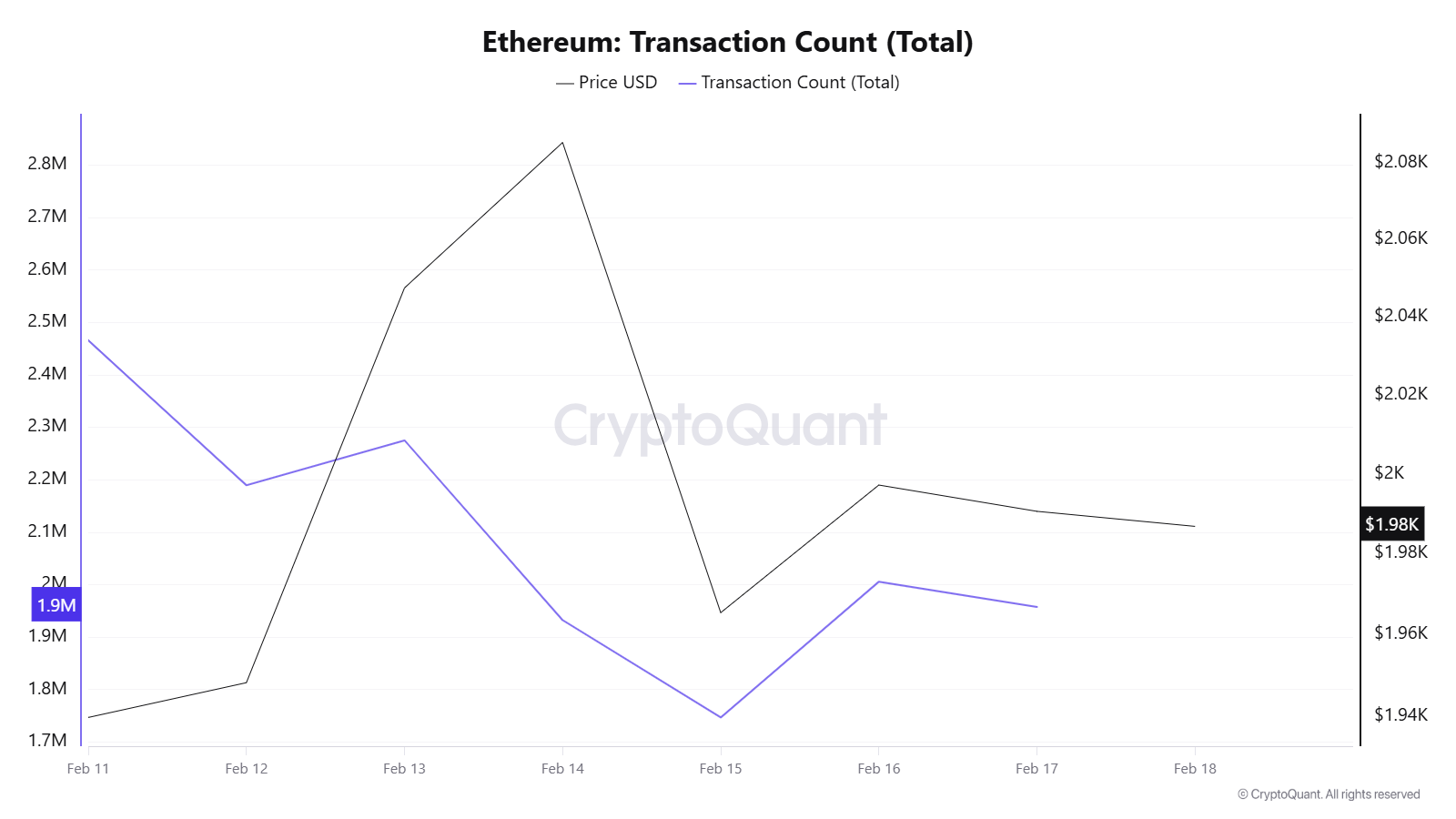
While 17,937,870 transactions were executed on the Ethereum network in the previous period, the number of transactions decreased by 18.7% this week, falling to 14,575,668. The highest daily transaction count during the period under review was recorded on February 11 at 2,466,399, while the lowest daily level was measured on February 15 at 1,747,152. When analyzing the correlation between transaction volume and price, it is observed that the positive relationship strengthened in the latter part of the period, and the overall outlook turned positive, albeit to a limited extent. However, the decline in total transaction volume indicates that momentum on the network has weakened compared to the previous period. This scenario leads to a decrease in the amount of Ethereum burned, parallel to the weakening of network activity. The decline in the burn rate leads to a more pronounced net supply increase, paving the way for a more aggressive expansion of the total supply in circulation. As a result, this expansion on the supply side creates additional pressure on the price and creates a dynamic that supports downward movements.
Tokens Transferred
While the total amount of ETH transferred in the previous period was 21,628,740 ETH, this week the figure dropped to 12,205,625 ETH, recording a decline of approximately 43.6%. The highest transfer volume during the period was 2,382,070 ETH on February 13, while the lowest transfer volume was 782,204 ETH on February 14.
The predominantly negative correlation between price and token transfer volume indicates that Ethereum holdings in wallets have been significantly sold off. In particular, the increase in transfer volume as the price weakened suggests that realized pressure on the chain has intensified. While fluctuations of up to 300% in daily transfer volume are noteworthy, when the decline in the number of transactions is considered alongside the decrease in total transfer volume, a sharp drop in the average amount of Ethereum per transaction ( ) is observed. This pattern reveals that large-scale transfers have weakened, and smaller-value transactions have gained prominence. Compared to the previous period, there appears to be fewer large players active, which implies a fragile structure in terms of market depth. In such an environment, it seems more likely that the price will follow a volatile and direction-seeking path in the short term.
Estimated Leverage Ratio
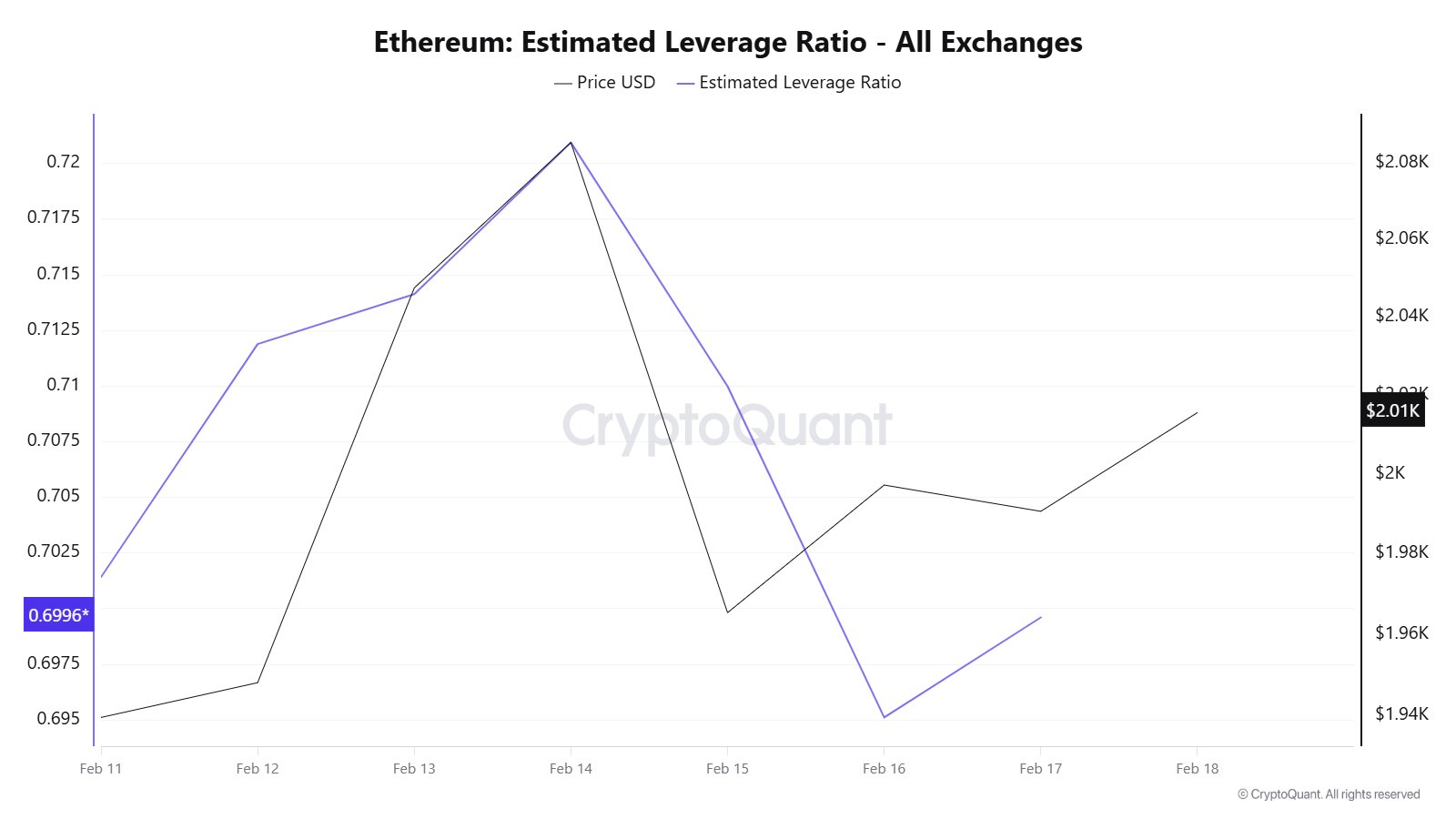
Over the 7-day period, the metric followed a volatile course overall. Starting at 0.701 on February 11, the first day of the period, the metric rose from this level, reaching its peak on February 14 at 0.720. The metric then declined during the remainder of the process and currently stands at 0.699. A higher ELR indicates that participants are willing to take on more risk and generally signals bullish conditions or expectations. Uptrends can also be driven by a decrease in reserves. Looking at Ethereum reserves, there were 16.00 million reserves at the beginning of the process, but this figure rose during the rest of the process and has now fallen to 16.21 million. At the same time, Ethereum’s Open Interest was seen at $24.11 billion at the beginning of the process. As of now, volume has remained flat within a narrow band during the process, and open interest has declined to $23.57 billion. With all this data, the ELR metric has followed a volatile trend for most of the process. The asset’s price has fluctuated between $1,900 and $2,100 with all this data. In conclusion, the horizontal trend in open interest volume and the slight increase in reserves throughout the process explain the horizontal trend in the ELR metric. This indicates that investors’ risk appetite is pessimistic.
ETH Onchain Overall
| Metric | Positive 📈 | Negative 📉 | Neutral ➖ |
|---|---|---|---|
| Active Addresses | ✓ | ||
| Total Value Staked | ✓ | ||
| Derivatives | ✓ | ||
| Supply Distribution | ✓ | ||
| Exchange Supply Ratio | ✓ | ||
| Exchange Reserve | ✓ | ||
| Fees and Revenues | ✓ | ||
| Blocks Mined | ✓ | ||
| Transaction | ✓ | ||
| Estimated Leverage Ratio | ✓ |
*The metrics and guidance provided in the table do not alone explain or imply any expectation regarding future price changes in any asset. Digital asset prices can fluctuate based on numerous variables. The on-chain analysis and related guidance are intended to assist investors in their decision-making process, and basing financial investments solely on the results of this analysis may lead to unfavorable outcomes. Even if all metrics produce positive, negative, or neutral results simultaneously, the expected outcomes may not materialize depending on market conditions. It would be beneficial for investors reviewing the report to take these warnings into consideration.
Legal Notice
The investment information, comments, and recommendations contained in this document do not constitute investment advisory services. Investment advisory services are provided by authorized institutions on a personal basis, taking into account the risk and return preferences of individuals. The comments and recommendations contained in this document are of a general nature. These recommendations may not be suitable for your financial situation and risk and return preferences. Therefore, making an investment decision based solely on the information contained in this document may not result in outcomes that align with your expectations.
NOTE: All data used in Ethereum on-chain analysis is based on CryptoQuant.